Prompt to Render with Nano Banana - Google Gemini

Generative AI revolutionized architectural rendering, but it requires complex prompts and technical knowledge. Discover how Redraw simplifies this process,

Prompt to Render with Nano Banana - Google Gemini
Author
Alexandre Kuhn
Co-founder and marketing director
Alexandre is currently the marketing director, but he previously worked as an architect specializing in BIM.
Prompt to Render with Nano Banana - Google Gemini
6 min
|
10.04.2026
Author
Alexandre Kuhn
Co-founder and marketing director
Alexandre is currently the marketing director, but he previously worked as an architect specializing in BIM.
[

Redraw

]

Create your free account

Start transforming your projects today using Redraw.

I want to register
Share this article

Generative artificial intelligence has transformed the way in which architects and designers view their projects. Tools such as Nano Banana, with the integration of Veo 3, opened up a universe of possibilities for creating conceptual images. However, this flexibility comes with a steep learning curve and a process that can be frustrating: the art of writing Perfect Prompt. While a generic prompt can be powerful, it requires the architect to become an expert in prompt engineering, shifting focus away from what really matters: design.


In this article, we will demystify the process of creating prompts for rendering in tools like Google's Nano Banana, explain what the mysterious “seeds” are, and show why the Redraw represents the natural evolution of this technology, offering a solution where the architect does not have to be a programmer to create spectacular images.


The Nano Banana Prompt Challenge

Transforming Ideas into Commands


To generate an accurate architectural image in Nano Banana, it's not enough to describe the scene. A detailed instruction manual for the AI must be provided. An effective prompt must be a combination of multiple commands, specifying every detail to avoid ambiguities.

Let's analyze an example of a complex prompt to generate a modern house facade:

“Photograph of a modern two-story house with exposed concrete façade and cumaru wood paneling, large floor-to-ceiling glass windows, black pivoting entrance door. The lighting should be dramatic, with late afternoon sunlight creating long shadows (golden hour). The house is surrounded by a minimalist garden with grass and an olive tree. Architectural photography style, Canon EOS 5D Mark IV camera with 35mm lens, f/8. The climate is serene and luxurious.”

This level of detail is necessary because AI lacks the context of an architect. You must specify:

  • Subject: The house and its materials.
  • Style: Architectural photography.
  • Lighting: Golden Hour, Long Shadows.
  • Environment: Minimalist garden.
  • Technical Parameters: Type of camera, lens, and aperture.

Any omission may result in an image that does not match the professional's vision, generating rework and wasting time.

What are Seeds

Why Did You Need to Worry About Them?

Another technical concept that haunts users of generic image generators is the “seed” (headquarters). The seed is a number that serves as a starting point for AI randomness. Think of it as the “DNA” of an image. If you use the same prompt and the same seed, the AI will generate the exact same image every time.


This is useful for maintaining consistency or for making small changes to a result that you liked. However, managing seeds is yet another layer of complexity. You need to find the seed of an image you liked, save it, and reinsert it with each new generation. Recently, OpenAI itself removed the ability to customize seeds in DALL-E 3, signaling that even for creators, this is a complex and unintuitive functionality for the end user.

The Solution without Prompt

Redraw was created to eliminate this technical barrier. We understand that architects and designers need a tool that speaks their language, that understands materials, lighting and architectural styles without the need for an instruction manual at every command.

In Redraw, the prompt is simplified because our AI is already an expert in architecture.

You don't have to specify that you want an “architectural photograph” or detail the type of lens. The platform is trained with a vast database of high-quality architectural images, allowing it to understand direct commands such as:

“It's as simple as relaxing and selecting the options that make sense for your project. Redraw builds the best prompt for you through examples.” Sergio Santos - Co-founder of Redraw - Specialist in Generative AI.
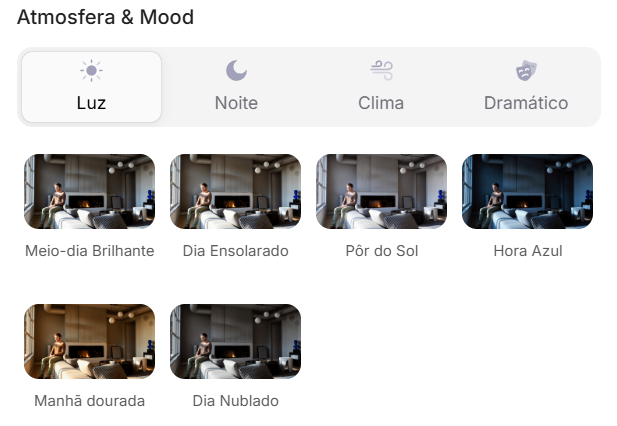
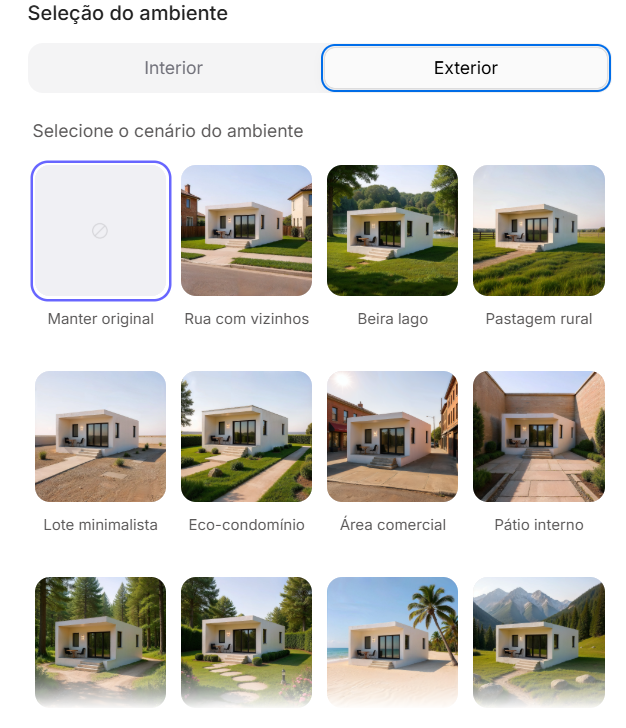
Redraw bridges the gaps with its expertise, delivering high-fidelity results with a fraction of the effort. And most importantly: On Redraw, you don't have to worry about seeds. Our technology was developed to offer consistency and high-quality variations in an intuitive way, through a simple and visual interface, allowing you to refine your projects without requiring technical programming knowledge.

Conclusion

Let AI Work for You, Not the Other Way Around

Generic imaging tools are powerful, but they require the professional to adapt to them. The result is a workflow where the architect spends more time learning to “talk to the machine” than designing.


O Redraw reverses this logic. We teach the machine to understand architecture so you can focus on your creative vision. We believe that technology should be an extension of your creativity, not an obstacle. By simplifying the prompt and eliminating the need to manage technicalities such as seeds, Redraw gives power back to the architect, ensuring that the only skill needed to create incredible renders is their passion for design.


Are you ready to abandon complexity and focus on what really matters? Try Redraw and transform the way you view your projects.

Share this article
Summary of the content
[

Blog

]

Related articles

Access Blog
Redraw crowned on a podium: the best AI for architecture in 2026
Render
18.05.2026

Best AI for Architecture in 2026: Why Redraw Leads

Redraw
5 min of reading

"What's the best AI for architecture?" is the fastest-growing question among design professionals. And the answer depends on a criterion most people ignore: was the AI built for architecture, or is it being adapted to it?

Because in 2026, dozens of tools sell themselves as "AI for architecture." But when you look under the hood, most are the same thing: a wrapper on top of ChatGPT or Gemini, with a pretty interface and a high price. No proprietary model. No specialized training. Just generic AI relabeled as architecture.

Redraw is different. This article explains why.

What "AI for architecture" actually means

When we talk about AI for architecture, we mean a tool that understands projects. That takes what you designed and renders it respecting geometry, proportions, materials, and lighting. That doesn't invent windows, change the floor plan, or add elements that don't exist.

This requires AI models trained on millions of real project images. Not generic internet images. Architecture, engineering, and interior design projects, with all their particularities: scale, materiality, use context.

Most tools on the market don't have this. They use generic models (ChatGPT, Gemini, Flux, Stable Diffusion) and add an interface layer on top. The result is predictable: pretty images that don't represent your project.

The problem with generic "AI for architecture" tools

Several platforms position themselves as AI for architecture today. Rendair, ArchiVinci, LookX, Veras, among others. Each with its own pitch. But behind the scenes, the same pattern emerges: they don't have proprietary AI trained for architecture. They use ChatGPT, Gemini, or open models like Flux as the generation engine, add some visual presets, and sell it as "specialized." It's the same AI anyone uses directly in ChatGPT, with a different interface and a higher price.

The result reflects that. Project fidelity is low. Consistency across renders is weak. You generate 5 images of the same space and get 5 different interpretations. Materials are invented by the generic AI, not by real understanding of what the project demands.

What sets Redraw apart

Redraw has proprietary rendering models trained exclusively for architecture, engineering, and interior design. It's not ChatGPT with a skin. These are models developed in-house, fed with millions of real project images, that in benchmarks outperform any generic AI in fidelity, realism, and consistency.

When you upload a SketchUp screenshot to Redraw, the AI knows what it's looking at. It distinguishes interior from exterior. It recognizes materials by context. It understands how natural light behaves in the space. It preserves the lines and proportions of the original project.

AI hub: the best of the market, optimized for you

Redraw isn't limited to proprietary models. The platform works as a hub bringing together the best AIs on the market, all optimized for design professionals: ChatGPT, Gemini, Nano Banana (Flux-based) — all tuned for architectural context. And on top, Redraw's own models, constantly updated, that surpass each of these AIs when it comes to project fidelity.

Beyond rendering: a complete platform

Photorealistic render in 20-40 seconds. From any modeling software screenshot.

Enhance Render. Got a Lumion or V-Ray render and want to elevate it? 30 seconds.

Video generation. Redraw's own tool plus Veo 3 and Kling AI integrated.

3D object generation for SketchUp. Furniture, vegetation, 3D elements.

The price that makes no sense to ignore

Redraw's entry plan costs $15/month. That includes about 300 renders, access to all integrated AIs, Enhance Render, video and 3D generation. No special hardware needed. Runs in any browser on any machine. With 200K registered users and 500K+ renders generated per month, it's not a promise. It's proven.

Try Redraw → redraw.pro

How to render with ChatGPT inside Redraw — AI architecture
Render
18.05.2026

How to Render with ChatGPT: Why Architects Are Using It Inside Redraw

Redraw
5 min of reading

ChatGPT generates incredible images. That's a fact. Ever since GPT-4o gained native image generation, architects worldwide started testing it. And the results impress at first glance. Beautiful spaces, dramatic lighting, materials that look real.

Until you compare it with the project you actually designed.

Because ChatGPT wasn't built for architects. It generates beautiful images, but it doesn't generate your project. It invents windows that don't exist, changes proportions, swaps materials, and adds elements you never asked for. And if you try to fix it via prompt, you enter a trial-and-error cycle that can last hours.

The right question isn't "does ChatGPT render?". It does. The question is: does it render what you designed?

The problem with using ChatGPT directly

When you use ChatGPT directly to generate an architecture render, you're asking a generic AI to do specialized work. It's like asking a general practitioner to perform surgery. They understand medicine, but that's not what they do.

In practice, this means:

You have to write long, specific prompts trying to describe every detail of your project. Even then, the result comes out different from what you imagined. ChatGPT has no sense of architectural scale. It doesn't understand that a door is 2.10m, that a double-height ceiling changes the proportion of the entire space, or that the finish is porcelain tile and not marble.

And worse: every time you generate a new image, the result is completely different. There's no consistency. You ask for 5 versions of the same space and get 5 different projects. For anyone who needs to present finish variations to a client, this doesn't work.

If you want to dive deeper into why prompts get complicated in ChatGPT and simplified in Redraw, check this comparison we published: Render prompts: why ChatGPT complicates and Redraw simplifies.

ChatGPT inside Redraw: the difference

What many people don't know is that you can use ChatGPT inside Redraw. Not generic ChatGPT. A version tuned for architecture.

Redraw developed studies and adjustments to turn ChatGPT into a deep tool for architectural rendering. When you use ChatGPT inside Redraw, it understands project context: it can tell a residential interior from a commercial one, recognizes materials, respects proportions.

It's the same engine, but directed. Like the difference between a generic GPS and Waze: same underlying technology, completely different result because one knows the context.

But it doesn't stop there. Inside Redraw, you also access Nano Banana and other AI models. Want to compare results between ChatGPT and Nano Banana for the same project? Do it on the same platform, without switching tools, without paying separate subscriptions.

That's the point: Redraw centralizes the best AIs in one place, all adapted for architecture. Instead of paying for ChatGPT Plus, subscribing to Nano Banana, and still not getting professional results, you pay one subscription and get access to everything.

Comparison: ChatGPT direct vs ChatGPT in Redraw vs native Redraw

CriterionChatGPT (direct)ChatGPT inside RedrawRedraw (own model)
FocusGeneralist (does everything)Tuned for architectureTrained for architecture
Project fidelityLow (invents elements)Medium-high (directed context)High (respects original geometry)
Prompt requiredLong and detailedSimplifiedMinimal or none
Consistency across rendersLow (every image differs)MediumHigh (controlled variations)
Material qualityGenericGoodPhotorealistic
LightingImpressive but artificialNaturalTrained for architectural light
CostUS$ 20/month (ChatGPT Plus)Included in Redraw planFrom US$ 15/month
Other AIs includedNoYes (Nano Banana and others)Yes

What Redraw does that ChatGPT can't

The Redraw rendering model was trained specifically to be better than ChatGPT for architecture. It's not an opinion, it's the result of the training: millions of real project images, with real geometry, materials, and lighting.

When you upload a SketchUp screenshot to Redraw, it understands what it's looking at. You don't need to describe "living room with porcelain floor, gray sofa, floor-to-ceiling window with natural light coming from the left". It sees the model and renders it while keeping everything in place.

With ChatGPT, even with a perfect prompt, the AI will interpret your description and generate something new. It might look good. But it won't be your project.

If you want to go deeper into how to create efficient prompts for interior renders, there's a complete guide here: Complete guide to prompts for interior renders with AI.

For those who use ChatGPT today

If you already use ChatGPT to generate visual references, brainstorm facades, or explore styles, keep doing it. It's good at that. Generating ideas, exploring concepts, creating visual moodboards. For that, ChatGPT is excellent.

But when it's time to render your actual project, with fidelity, consistency, and professional quality, use Redraw. You can even use ChatGPT inside it to get the best of both worlds.

The logic is: ChatGPT to explore. Redraw to deliver.

Frequently Asked Questions

Does ChatGPT render architecture projects?

Yes, ChatGPT generates architecture images, but it creates generic images based on text descriptions — it doesn't render your specific project. It doesn't read 3D files and doesn't keep fidelity to the original geometry. Redraw solves this: you upload a 3D model screenshot and in 20 to 40 seconds you get a photorealistic render that respects windows, proportions, and materials from your original project, without inventing elements.

Can I use ChatGPT inside Redraw?

Yes. Redraw integrates ChatGPT in a version tuned for architecture, with better understanding of materials, lighting, and project context. The result is superior to ChatGPT used directly because the system already directs the prompt and injects architectural context, eliminating long prompts and the trial-and-error cycle typical of generic ChatGPT.

ChatGPT Plus or Redraw: which is more worth it for architects?

ChatGPT Plus costs US$ 20/month and is generic. Redraw starts at US$ 15/month, is specialized in architecture, and includes tuned ChatGPT plus other models like Nano Banana in the same subscription. For project rendering, Redraw delivers more for less: a single subscription replaces ChatGPT Plus, render plugins, and hours of monthly setup.

Does Redraw need a prompt to render?

For Redraw's native rendering model, no. You upload the 3D model image and it generates automatically in 20 to 40 seconds. To use ChatGPT inside Redraw, the prompt is simplified because the system already directs the architectural context, so a short sentence delivers what generic ChatGPT would require paragraphs of technical description for.

Is Nano Banana inside Redraw?

Yes. Redraw works as an AI hub: you access tuned ChatGPT, Nano Banana, and other models on the same platform, without separate subscriptions. This lets you compare results between models for the same project and choose what delivers best for each type of render — interior, facade, humanized floor plan — without switching tools.

Why does ChatGPT invent elements in architecture renders?

ChatGPT generates images from text and learned patterns, not from your project's geometry. It fills gaps with what statistically looks like "beautiful architecture", even if that means inventing windows or swapping materials. Redraw works differently: it reads your 3D model screenshot as faithful reference and renders while preserving the geometry, openings, and original proportions of the project.

Try Redraw → redraw.pro

Redraw vs Enscape — rendering tools comparison for architecture
Render
15.05.2026

Redraw vs Enscape: Comparison for Architects 2026

Redraw
5 min of reading

Enscape has an interesting proposition: real-time rendering, directly inside your modeling software. No waiting hours. No leaving SketchUp or Revit. Click, render. Sounds ideal.

And for a long time it was the best option for those who needed speed without the complexity of V-Ray or Corona. Chaos Group understood this and bought Enscape for exactly that reason. It was supposed to be the fast version of their ecosystem.

But speed without realism solves half the problem. And that's the central question for Enscape in 2026.

The problem no one talks about with Enscape

Enscape renders fast. No one argues with that. But try to deliver an interior render with convincing natural lighting, realistic floor reflections and textures that don't look plastic. You'll spend hours adjusting, testing, redoing. And most of the time, the final result still looks like "software render". It lacks the realism the client expects when seeing a project image.

It's not the user's fault. It's engine limitation. Enscape was designed to be fast, not to compete in quality with V-Ray. Real-time rendering sacrifices complex calculations of global illumination, caustics and light bounce. The result is clean, fast, but generic.

And even being "fast" at rendering, setup isn't. You still need to configure materials one by one, adjust textures, position lighting. Rendering itself takes seconds, but preparation takes hours. And that's where frustration kicks in: you spend all this time and the result doesn't reach where you wanted.

Enscape is a plugin (and that matters)

Enscape runs inside SketchUp, Revit or ArchiCAD. It doesn't work alone. You pay the Enscape license plus the host software license.

Enscape Solo costs $575/year. Enscape Premium goes for $635/year. Add SketchUp Pro ($349/year) or a Revit license, and annual cost easily exceeds $900. For a 3-person office, multiply by 3.

And you're locked into those software. If you switch from SketchUp to Blender, you lose Enscape. If you want to render a quick image outside the office, without the PC with the software installed, you can't.

How Redraw solves what Enscape can't

There are two scenarios here.

Scenario 1: Enscape + Redraw (complement)

You like Enscape, use it daily, don't want to change your workflow. Fine. Redraw comes in as the missing layer.

Rendered with Enscape and got the "software render" look? Drop it into Redraw's Enhance Render. In 30 seconds, AI improves textures, fixes lighting, adds natural reflections and delivers that photorealism Enscape alone can't reach. That's exactly what the feature was built for: take what conventional software delivers and elevate it to another level.

The combo works well. Enscape provides real-time preview speed, Redraw provides the final finish.

Scenario 2: Redraw alone (replacement)

If what you want is the final result, without worrying about hours of setup, Redraw does everything alone. Take a screenshot of your 3D model, upload to the platform, and in 20 to 40 seconds you have a photorealistic render. No material configuration, no light adjustment, no plugin.

And with quality superior to what Enscape delivers alone. Because Redraw's AI was trained specifically for architecture. It understands how natural light behaves in interiors, how materials reflect, how vegetation creates shadows. Things that in Enscape you try to configure manually and rarely get right the first time.

Comparison: Enscape vs Redraw

CriteriaEnscapeRedraw
Render timeNear instant (but setup takes hours)20 to 40 seconds (no setup)
Result qualityGood but generic. Lacks photorealismPhotorealistic (AI trained for architecture)
Hardware requiredDedicated GPU, powerful PCAny PC with internet
Annual cost~$575 + host (SketchUp/Revit)From $180/year
Runs alone?No (plugin for SketchUp/Revit/ArchiCAD)Yes, directly in browser
Per-render setupManual: materials, light, cameraAutomatic: AI identifies everything
Remote accessNoYes, 100% cloud
Quick variationsInstant preview but requires manual adjustments30 sec per variation
Lighting realismLimited (real-time sacrifices GI)High (AI simulates natural lighting)

The math

For a freelance architect who delivers 30 renders per month:

With Enscape:
Enscape Solo license: $575/year
SketchUp Pro license: $349/year
Proper hardware: ~$2,000/year (amortized)
Setup time per render: ~40 minutes (total: ~20 hours/month)
Total: ~$2,924/year + 20 hours/month of setup

With Redraw:
Basic plan: $180/year
Hardware: the laptop you already have
Total time: ~15 minutes/month
Total: $180/year + 15 minutes

Savings of $2,744/year and 20 monthly hours. And with better final result.

For those deciding now

If you haven't invested in Enscape yet, test Redraw first. Free account at redraw.pro, no credit card. Make your first renders and compare.

If you already use Enscape and like the workflow, add Redraw as complement. Enhance Render transforms your Enscape renders into results only V-Ray previously delivered.

And if you're tired of spending hours configuring materials for results that don't reach where you want, Redraw alone solves it. In seconds. In browser. No installation.

Frequently Asked Questions

Does Enscape have photorealistic rendering compared to Redraw?

Enscape delivers good and fast results, but the real-time engine limits photorealism level. Global illumination, complex reflections and texture quality fall below engines like V-Ray. Redraw fills that gap with AI trained specifically for architecture, delivering photorealism in 30 seconds without configuring materials one by one. It's the difference between "software render" and a photo that looks real.

Can I enhance my Enscape renders with AI?

Yes. Redraw's Enhance Render feature was built exactly for that. Upload the render that came out of Enscape and in 30 seconds receive a version with enhanced textures, lighting and reflections. It's the fastest path for those who already use Enscape and want a photorealistic final finish without migrating software or re-rendering the entire scene.

Does Enscape work alone or does it need other software?

Enscape is a plugin and doesn't work alone. It requires an active SketchUp, Revit, Rhino or ArchiCAD license to run, adding two subscriptions to the budget. Redraw is a standalone platform that runs directly in the browser, no installation and no host software dependency, with total cost from $180/year against $924/year for Enscape + SketchUp.

Which is faster in the full workflow: Enscape or Redraw?

Enscape renders in real time, but total production time includes 30 to 60 minutes of configuration per scene: materials, light, camera. Redraw delivers the final result in 20 to 40 seconds from a 3D model screenshot, without any configuration. In the full workflow, considering an architect who delivers 30 renders per month, Redraw returns 20 monthly hours compared to Enscape workflow.

Is Enscape from the same company as V-Ray?

Yes. Chaos Group bought Enscape to have a faster option in the portfolio. But even within the Chaos ecosystem, Enscape doesn't compete in quality with V-Ray or Corona. Redraw solves this trade-off delivering Enscape speed and quality superior to V-Ray in a single cloud AI platform, without need for plugin or host software.

What is the best Enscape alternative in 2026 for architects?

The best Enscape alternative in 2026 is Redraw, AI platform trained specifically for architecture, engineering and interior design, with workflow that dispenses mandatory SketchUp or Revit. Redraw delivers photorealism in 30 seconds against Enscape's generic rendering, with savings of more than $2,700/year and 20 monthly hours of productivity returned.

Try Redraw → redraw.pro