Back to the Blog
Rendering Meaning

Rendering Meaning

Understand once and for all the meaning of rendering and why this process is so talked about in architecture and design.
Rendering Meaning
Author
Redraw
Administrador
Use AI to delight your customers, sell more, and make your images and videos stand out in ads and marketplaces.
Rendering Meaning
6 min
|
18.03.2026
Author
Redraw
Administrador
Use AI to delight your customers, sell more, and make your images and videos stand out in ads and marketplaces.
[

Redraw

]

Create your free account

Start transforming your projects today using Redraw.

I want to register
Share this article

Demystifying Rendering: What You Need to Know

Rendering meaning is not just a question for those who have barely ventured into SketchUp or Revit (in fact, none of them render on their own, see?). In fact, understanding what rendering is and why this process is so talked about has become almost the obligation of any architect, engineer, designer, or student who invests in visualization as part of their work. After all, what's the point of creating an impressive project on paper if, when it comes to showing it to the client, it looks like a poorly finished model or, even worse, just gray lines and cubes?

That's why today we're going to uncomplicate the concept of rendering once and for all. Yes, that beautiful word that many pretend to master but run away when the fateful black screen of traditional software appears or that message: “Plug-in not found”. Breathe. It doesn't need drama. The idea here is to remove fear for good and show how to transform 3D models not only into beautiful images, but also into professional presentations that truly communicate.

What does rendering really mean in the world of architecture

Contrary to what many people think, rendering is not a piece of cake. The technical translation may seem scary at first glance, but deep down, it's simple. Rendering, in essence, is the process of converting digital 3D models into realistic (or stylized, if you prefer) two-dimensional images. It's like taking a photograph of something that doesn't exist yet, only in the virtual world.

Render is the bridge between design and emotion!

In the world of architecture, then, rendering goes far beyond making the portfolio beautiful. It means bringing the project to life before it even gets off the ground. That's where this “magic” comes in: transforming walls, floors and volumes into textures, shadows, warm lights and reflections that leave the customer jaw-dropping. And it's not just for the customer, see? Often, that detailed rendering is what guarantees the developer's “yes” or even regulatory approvals.

Rendering meaning: technical definition and practical applications

Now, removing the dust from the technical terms, rendering meaning can be defined, in the “architect”, as:

  • Process of generating a digital image (render) from three-dimensional data.
  • Simulation of light, materials, textures and cameras to transform a raw model into a realistic (or stylized, depending on the customer's taste) vision.
  • Creation of images for architectural projects, interior design, commercial presentations, contests, videos and even games.

In practice, this translates into something much less glamorous: running such a rendering may mean waiting a few minutes, or hours, while the computer is cold to scratch walls, calculate shadows, generate reflections, insert textures and treat each pixel of your project. And all of this, who would say, can be done through the browser, as in Redraw, with the help of artificial intelligence to accelerate (and simplify!) each stage.
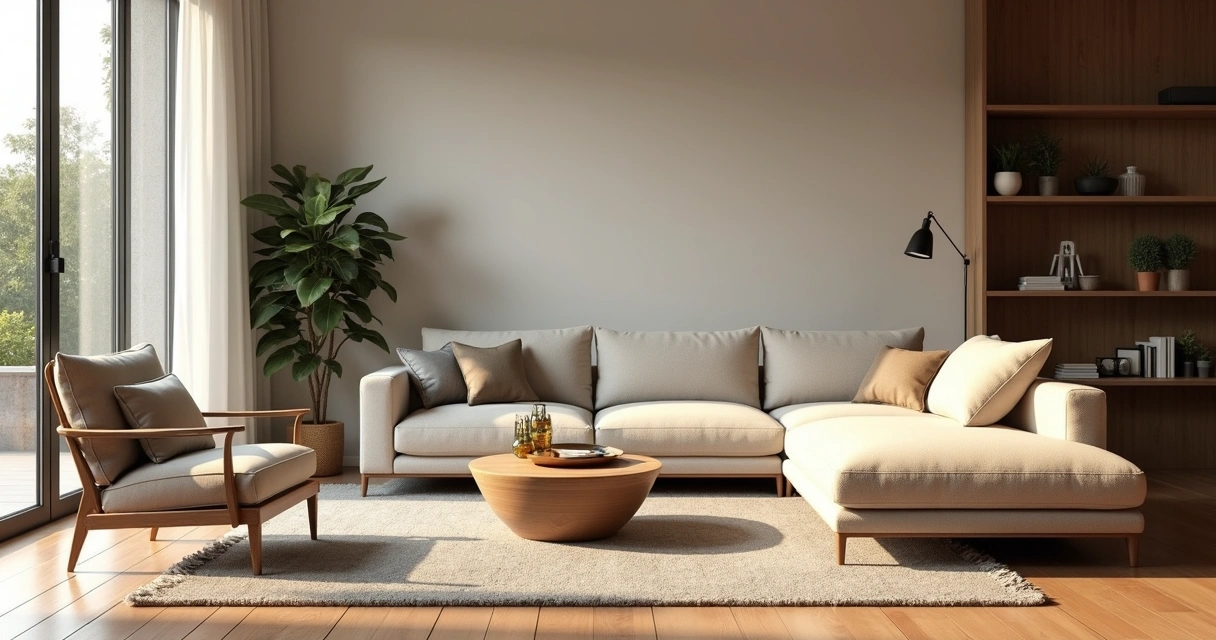
Ambiente residencial moderno renderizado em 3D com iluminação realista

The process behind rendering

Behind each final image, there is a series of hellish mathematical, physical, and digital operations (those that tie the knot in the head of an architecture student). But aside from the excess drama, the process boils down to:

  1. The user builds a 3D model with lines, volumes, and basic textures.
  2. You define the camera, the viewing angle, and the “objectives” of the render (what to focus on, how to illuminate, etc.).
  3. Textures, materials, lighting information, and environment settings are applied.
  4. The program begins the simulation of light rays, adding shadows, reflection calculations, and transparencies.
  5. The computer calculates each pixel until it generates a final giant image (or a video, if you prefer).

All of this used to be time-consuming, expensive, and torture for weak machines. Now, with platforms like Redraw using cloud processing and AI, that suffocation has all but disappeared.

Why rendering changed the routine of architects and designers

Five minutes to convince someone: that's all you have. And that's where the perfect rendered image comes in. Rendering isn't just a free beauty step. It's the most effective way to:

  • Communicate ideas for those who do not understand plans, cuts and facades;
  • Present design solutions, colors, materials and lighting;
  • Anticipate errors even before execution;
  • Change the story of a project at the presentation meeting.

Without yielding, the project loses strength and hardly gains the expected impact. And look, I've seen professionals lose business because of a poorly done image, a “hard” performance, or something that looked like a poorly done video game scene...

The main types of rendering you should know

Render is not all the same, and each modality fits a need. Just look at the main types:

Raster rendering

The “fast” method: transforms polygons and pixels into images without major light calculations, suitable for quick presentations or projects that do not require so much photorealism.

Ray tracing rendering

Here comes the glamor of physics: it simulates each ray of light, its reflections and refractions, creating ultra-realistic images. Oh, but don't complain after the delay (on some platforms, you might want a strong coffee while you wait... or use AI in the cloud and solve it quickly).

Real-time rendering

It allows the user to navigate the scene in real time, ideal for interactive presentations. Almost a virtual visit, perfect to surprise that indecisive customer.

Offline rendering

This process is generally slower, but it results in incredibly detailed images, with very high quality, often used in portfolios, contests, or marketing and sales materials.

AI-based rendering

Fresh news: artificial intelligence algorithms accelerate the rendering process, improve materials, adjust lighting and deliver results that previously relied only on a lot of study and patience. Platforms like Redraw are making this process faster, more accessible and, most importantly, free of technical complexity.

Real-time rendering vs. offline rendering

Who has never been left dividing the screen between the “stuck” SketchUp and that rendering running on the firm's computer? The difference between real-time and offline rendering is not only in time, but in the entire purpose of each process:

  • Real-time: the user makes adjustments, moves the camera, changes materials and sees everything updated instantly. Don't expect photorealistic perfection, but get ready to wow clients in interactive meetings.
  • Offline: everything is calculated before the presentation. It generally takes longer, but offers eye-filling visual results, with reflections, soft shadows, and richness of detail.
Time or quality? Choose wisely.

Photorealistic rendering and its applications

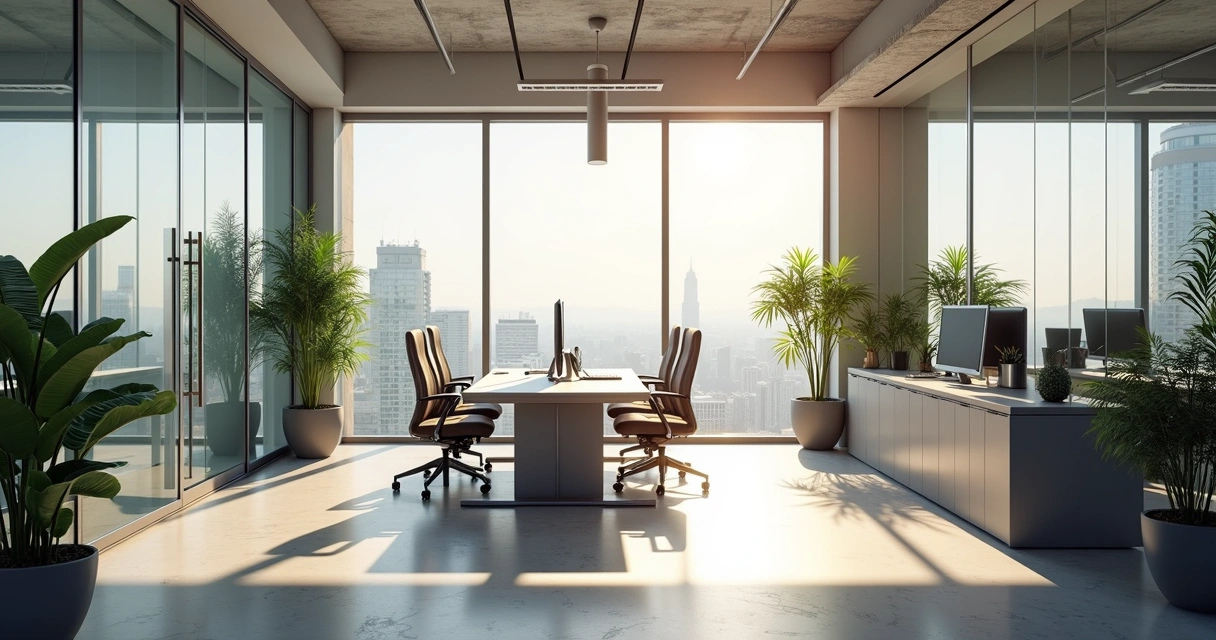
Photorealistic rendering is the consumer dream of any architect who seeks to get the most visual impact from their projects. It's the art of making the customer ask: “Is this a photo or is it ready yet?”

This type of image requires extreme attention to materials, lighting (natural and artificial), ambience, and post-production. For a long time, it was only possible with powerful machines and expensive software. Today, AI and cloud rendered (literally!) this game: any professional can achieve the review result directly from the browser.
Escritório corporativo fotorrealista renderizado com luz natural

Ray tracing: the science behind perfect reflexes

Do you know those renders where you can even see the reflection of the lamp on the glass top? The merit of ray tracing, a technique that mimics the real behavior of light: each ray “shoots”, hits, reflects, crosses, interacts with textures, all in accordance with the laws of physics.

The result? Precise reflections, faithful colors, shadows with soft gradients. For the end user, only the visual impact matters. But for those who render, understanding the power of ray tracing can be decisive when choosing the type of image, the extent to invest in quality and when seeking a more practical method (as Redraw's AI can deliver).

How does the rendering process work in practice

Talking is easy. Getting your hands dirty is the challenge. Here is a summary of the traditional path for those who are still using conventional software:

  1. 3D modeling (with basic tools): walls, slabs, furniture...
  2. Configuration of materials: floor textures, glass shine, paint color...
  3. Definition of lighting: artificial, natural, prominent light spots.
  4. Camera choice: angles, distances, focal plane (all to create drama, of course).
  5. Render configuration: resolution, quality, effects
  6. Spin the dice and wait while the computer does all the mathematical calculations, with a bit of suspense and expectation for the result...
  7. Post-production: color adjustment, brightness, minor artistic retouching.

With AI-based solutions, such as Redraw, much of this configuration is done automatically. The user basically uploads an image, selects the type of render and receives the final version ready in seconds. It sounds like magic, but it's not (or maybe it's a bit).

From the 3D model to the final image: step by step

Do you want a simple script so you don't feel embarrassed when showing your rendering? Here's the winning sequence:

  • Create or import the 3D model in the program of your choice (remember that SketchUp and Revit are not natively rendered, so save the image of your model);
  • Prepare the layers of materials and textures;
  • Set the lighting, one of the most treacherous items (bad light will sink any render!) ;
  • Configure the scene (camera, resolution, effects);
  • Send for rendering: in the traditional method, adjust every detail; with AI, send and wait;
  • Look at the result, smile (or cry!) and get ready to show it to the customer.
The secret isn't just in the software. It's in the open eye.

Hardware and software: what really matters

That's the point where a lot of people make a big mistake. That story that only PC gamers can render may have even been true in the past. Today, cloud-based and AI-based platforms broke that rule for good.

  • 3D modeling: can be done on almost any computer.
  • Traditional rendering: requires dedicated GPU, spare memory, and patience. Without good hardware, the image may take hours or not come out at all.
  • AI rendering: just upload the basic image of the project and leave the processing to the cloud, as Redraw does. Who would have thought: even an entry-level notebook became a rendering station!

AI rendering: the new era of architectural visualization

If until recently rendering was synonymous with suffering and a graphics card upgrade, today it is possible to render faster and easier with the aid of artificial intelligence.

  • AI recognizes elements, materials, and lighting in your project.
  • Transform sketches into photorealistic images in no time.
  • Take away that fear of missing a deadline just because your PC “is crying”.

Redraw has been consolidating itself precisely by offering this experience without a learning curve, eliminating technical steps and delivering results in seconds, directly from the browser. No need to invest in expensive plugins or spend hours configuring complex settings.
Inteligência artificial processando um render 3D de arquitetura

Why artificial intelligence is transforming the industry

Just look at the current scenario. Professionals have short deadlines, increasingly demanding clients, increasing competition, and tight budgets. Artificial intelligence revolutionized rendering because it offers:

  • Speed: processes images in seconds, not hours.
  • Access: works on any computer, all you need is internet access.
  • Simplicity: the technical part becomes detail, AI takes care of parameters, lighting and material correction.
  • It delivers results previously reserved only to large studios (and monstrous budgets!).

Stop wasting time struggling with settings and plugins. Focus on the creativity and communication of your project. Technology already does the rest.

Redraw vs. traditional methods: speed without complication

Those who have spent nights “cooking” a rendering know the pain of seeing the machine crash or having to redo everything because the customer requested a “small adjustment” at the last minute. Redraw solves this with a simple proposal:

  • No need for very expensive plugins (which weigh on your pocket and only work with an absurd annual license);
  • 100% cloud processing, your computer only serves as a bridge, you don't have to suffer;
  • Automatic results: the image went up, in seconds you can finally breathe a sigh of relief;
  • Affordable plans for students, freelancers, and businesses.

It seems ideal for that last-minute presentation, or to avoid becoming a slave to the limitations of your own hardware. Yes, it's to make it easier. And you don't even have to read a thousand-page manual.

Best Practices for Professional Rendering

Do you want to reach another level and not rely solely on luck or AI? Follow some tips that save any presentation:

  • Plan what you want to show: it's no use rendering every angle, choose the best focus.
  • Adjust materials and finishes: even the smallest detail makes a difference.
  • Invest time in lighting: it changes everything, from dramatic to “salt-free”.
  • Use post-production sparingly: exaggerations deliver the trick, balance generates realism.
  • Test different configurations: the perfect rendering is the one that thrills.

Preparing your scene for better results

Rendering well doesn't start at the click of the button. Preparation is crucial. Don't forget:

  • Clean the template: delete unnecessary elements.
  • Think about storytelling: insert objects, people, vegetation to humanize the scene.
  • Set the rendering time: morning, afternoon or evening, everything changes in perception.
  • Apply cameras with different focal lengths to achieve striking effects.

It takes work, but it's the kind of effort that translates into presentations that really convince.

Lighting and materials: the secrets of impactful renders

Do you want to transform a common rendering into a reference? Focus your attention on the two factors that stand out the most:

  • Lighting: the soul of rendered project. Test natural light, artificial light, direct and indirect lights, spots, and special effects. Sometimes a simple glow makes the difference between “approved” and “off”.
  • Materials: from glass to concrete, from marble to wood. The closer to the real one, the more the viewer connects to the project.
Texture and light can transform the obvious into the unforgettable.

FAQ - Frequently asked questions about rendering

What does it mean to render in 3D?

3D rendering is the process of transforming a three-dimensional model (made in modeling software) into an image that simulates light, materials, textures, and perspective. This image may look as real as a photo or follow a style of its own, depending on the setting. The objective is to visually communicate the project, facilitating understanding both for clients and for those who execute the work.

What are the main types of rendering?

There are several types, but the main ones are: raster rendering (faster, less detail), ray tracing (simulates real light, longer), in real time (for interactive navigation), offline (high quality for final materials) and, recently, rendering based on artificial intelligence, which speeds up and simplifies the entire process.

How does the rendering process work?

At the base, it consists of taking a 3D model, configuring lighting, materials, choosing camera angles, and defining scene details. The software then calculates how light interacts with all surfaces and creates a 2D image from that data. The rendering can be offline, in real time, or AI-supported, depending on the solution chosen.

Is rendering 3D projects expensive?

It depends on the method used. Traditional software often requires powerful computers, graphics cards, and expensive licenses. On the other hand, AI solutions, such as those offered by Redraw, make rendering accessible even for those who only have a basic notebook, since all processing takes place in the cloud and the costs are much lower.

Where can I learn how to render better?

You can search for online tutorials, free courses, workshops, and lots of practical experimentation in modeling and rendering software. Platforms offer guides and support, as well as communities willing to share tips and teach techniques. If you want to simplify this path, tools such as Redraw reduce technical weight and allow you to focus more on the creative part of your projects.

Conclusion: master the art of rendering and change your projects

Ultimately, learning the true meaning of rendering is a game-changer. The market is changing fast, and those who don't keep up are left behind. Master rendering and transform your projects into visual experiences that inspire, connect, and conquer. AI platforms, such as Redraw, are there precisely to be the bridge between technology and your creativity, turning what was previously complex into a quick, uncomplicated and surprising step.

So, ready to render without drama and show the world the real potential of your projects? Get to know the Redraw and see how to make a qualitative leap, saving time and truly impressive.

Share this article
Summary of the content
[

Blog

]

Related articles

Access Blog
Render
01.04.2026

Prompt to Render with Nano Banana - Google Gemini

Alexandre Kuhn
5 min of reading

Generative artificial intelligence has transformed the way in which architects and designers view their projects. Tools such as Nano Banana, with the integration of Veo 3, opened up a universe of possibilities for creating conceptual images. However, this flexibility comes with a steep learning curve and a process that can be frustrating: the art of writing Perfect Prompt. While a generic prompt can be powerful, it requires the architect to become an expert in prompt engineering, shifting focus away from what really matters: design.


In this article, we will demystify the process of creating prompts for rendering in tools like Google's Nano Banana, explain what the mysterious “seeds” are, and show why the Redraw represents the natural evolution of this technology, offering a solution where the architect does not have to be a programmer to create spectacular images.


The Nano Banana Prompt Challenge

Transforming Ideas into Commands


To generate an accurate architectural image in Nano Banana, it's not enough to describe the scene. A detailed instruction manual for the AI must be provided. An effective prompt must be a combination of multiple commands, specifying every detail to avoid ambiguities.

Let's analyze an example of a complex prompt to generate a modern house facade:

“Photograph of a modern two-story house with exposed concrete façade and cumaru wood paneling, large floor-to-ceiling glass windows, black pivoting entrance door. The lighting should be dramatic, with late afternoon sunlight creating long shadows (golden hour). The house is surrounded by a minimalist garden with grass and an olive tree. Architectural photography style, Canon EOS 5D Mark IV camera with 35mm lens, f/8. The climate is serene and luxurious.”

This level of detail is necessary because AI lacks the context of an architect. You must specify:

  • Subject: The house and its materials.
  • Style: Architectural photography.
  • Lighting: Golden Hour, Long Shadows.
  • Environment: Minimalist garden.
  • Technical Parameters: Type of camera, lens, and aperture.

Any omission may result in an image that does not match the professional's vision, generating rework and wasting time.

What are Seeds

Why Did You Need to Worry About Them?

Another technical concept that haunts users of generic image generators is the “seed” (headquarters). The seed is a number that serves as a starting point for AI randomness. Think of it as the “DNA” of an image. If you use the same prompt and the same seed, the AI will generate the exact same image every time.


This is useful for maintaining consistency or for making small changes to a result that you liked. However, managing seeds is yet another layer of complexity. You need to find the seed of an image you liked, save it, and reinsert it with each new generation. Recently, OpenAI itself removed the ability to customize seeds in DALL-E 3, signaling that even for creators, this is a complex and unintuitive functionality for the end user.

The Solution without Prompt

Redraw was created to eliminate this technical barrier. We understand that architects and designers need a tool that speaks their language, that understands materials, lighting and architectural styles without the need for an instruction manual at every command.

In Redraw, the prompt is simplified because our AI is already an expert in architecture.

You don't have to specify that you want an “architectural photograph” or detail the type of lens. The platform is trained with a vast database of high-quality architectural images, allowing it to understand direct commands such as:

“It's as simple as relaxing and selecting the options that make sense for your project. Redraw builds the best prompt for you through examples.” Sergio Santos - Co-founder of Redraw - Specialist in Generative AI.

Redraw bridges the gaps with its expertise, delivering high-fidelity results with a fraction of the effort. And most importantly: On Redraw, you don't have to worry about seeds. Our technology was developed to offer consistency and high-quality variations in an intuitive way, through a simple and visual interface, allowing you to refine your projects without requiring technical programming knowledge.

Conclusion

Let AI Work for You, Not the Other Way Around

Generic imaging tools are powerful, but they require the professional to adapt to them. The result is a workflow where the architect spends more time learning to “talk to the machine” than designing.


O Redraw reverses this logic. We teach the machine to understand architecture so you can focus on your creative vision. We believe that technology should be an extension of your creativity, not an obstacle. By simplifying the prompt and eliminating the need to manage technicalities such as seeds, Redraw gives power back to the architect, ensuring that the only skill needed to create incredible renders is their passion for design.


Are you ready to abandon complexity and focus on what really matters? Try Redraw and transform the way you view your projects.

Render
01.04.2026

Prompt to Render: Why ChatGPT Complicates and Redraw Simplifies for Architects

Alexandre Kuhn
5 min of reading

Generative artificial intelligence has transformed the way in which architects and designers view their projects. Tools such as ChatGPT, with the integration of DALL-E, opened up a universe of possibilities for creating conceptual images. However, that flexibility comes with a steep learning curve and a process that can be frustrating: the art of writing Perfect Prompt. While a generic prompt can be powerful, it requires the architect to become an expert in prompt engineering, shifting focus away from what really matters: design.


In this article, we will demystify the process of creating prompts for rendering in tools like ChatGPT, explain what the mysterious “seeds” are, and show why Redraw represents the natural evolution of this technology, offering a solution where the architect does not have to be a programmer to create spectacular images.


The Prompt Challenge in ChatGPT

Transforming Ideas into Commands


To generate an accurate architectural image in ChatGPT, it is not enough to describe the scene. A detailed instruction manual for the AI must be provided. An effective prompt must be a combination of multiple commands, specifying every detail to avoid ambiguities.

Let's analyze an example of a complex prompt to generate a modern house facade:

“Photograph of a modern two-story house with exposed concrete façade and cumaru wood paneling, large floor-to-ceiling glass windows, black pivoting entrance door. The lighting should be dramatic, with late afternoon sunlight creating long shadows (golden hour). The house is surrounded by a minimalist garden with grass and an olive tree. Architectural photography style, Canon EOS 5D Mark IV camera with 35mm lens, f/8. The climate is serene and luxurious.”

This level of detail is necessary because AI lacks the context of an architect. You must specify:

  • Subject: The house and its materials.
  • Style: Architectural photography.
  • Lighting: Golden Hour, Long Shadows.
  • Environment: Minimalist garden.
  • Technical Parameters: Type of camera, lens, and aperture.

Any omission may result in an image that does not match the professional's vision, generating rework and wasting time.

What are Seeds

Why Did You Need to Worry About Them?

Another technical concept that haunts users of generic image generators is the “seed” (headquarters). The seed is a number that serves as a starting point for AI randomness. Think of it as the “DNA” of an image. If you use the same prompt and the same seed, the AI will generate the exact same image every time.


This is useful for maintaining consistency or for making small changes to a result that you liked. However, managing seeds is yet another layer of complexity. You need to find the seed of an image you liked, save it, and reinsert it with each new generation. Recently, OpenAI itself removed the ability to customize seeds in DALL-E 3, signaling that even for creators, this is a complex and unintuitive functionality for the end user.

The Solution without Prompt

Redraw was created to eliminate this technical barrier. We understand that architects and designers need a tool that speaks their language, that understands materials, lighting and architectural styles without the need for an instruction manual at every command.

In Redraw, the prompt is simplified because our AI is already an expert in architecture.

You don't have to specify that you want an “architectural photograph” or detail the type of lens. The platform is trained with a vast database of high-quality architectural images, allowing it to understand direct commands such as:

“It's as simple as relaxing and selecting the options that make sense for your project. Redraw builds the best prompt for you through examples.” Sergio Santos - Co-founder of Redraw - Specialist in Generative AI.

Redraw bridges the gaps with its expertise, delivering high-fidelity results with a fraction of the effort. And most importantly: On Redraw, you don't have to worry about seeds. Our technology was developed to offer consistency and high-quality variations in an intuitive way, through a simple and visual interface, allowing you to refine your projects without requiring technical programming knowledge.

Conclusion

Let AI Work for You, Not the Other Way Around

Generic imaging tools are powerful, but they require the professional to adapt to them. The result is a workflow where the architect spends more time learning to “talk to the machine” than designing.


O Redraw reverses this logic. We teach the machine to understand architecture so you can focus on your creative vision. We believe that technology should be an extension of your creativity, not an obstacle. By simplifying the prompt and eliminating the need to manage technicalities such as seeds, Redraw gives power back to the architect, ensuring that the only skill needed to create incredible renders is their passion for design.


Are you ready to abandon complexity and focus on what really matters? Try Redraw and transform the way you view your projects.

Render
18.03.2026

The 8 Best Renderers of 2026

Redraw
5 min of reading

Every year the market for architectural renderers changes, some alternatives appear, others cease to be relevant, software remains king of the market while some are consolidating and, in the midst of all this, in 2026, IAs are increasingly capable of generating and improving their renderings and have a promising future in sight.

This year, however, given the news and evolution of the renderers, the question is no longer which option is the best, since all of them can give you great results, but rather, which one best meets my demands.

In this article, we will show you the 8 best options at the beginning of the year for you to render your architectural projects, evaluating them based on 3 aspects: learning difficulty, price, and rendering agility.

V-RAY

V-Ray remains the first choice when thinking about rendering for architecture. It is one of the most consolidated tools and remains a reference for its precision and realism, great for offices that want to have an above average result and for studios that work with luxury real estate launches where each image needs to be like a photo.

The V-Ray engine is robust, offering rendering options via CPU, GPU, or a hybrid model. Its main advantage is full control over lighting parameters and materials. However, this control comes at a price: the learning curve is high and the time to render is the longest among the options on the list.

Positive Points:
  • Unquestionable quality: It remains one of the best options in terms of final quality.
  • Chaos Ecosystem: Perfect integration with the Chaos Cosmos (asset library) and Chaos Cloud.
  • Post-Production Control: Generates a wide range of Render Elements for advanced composition in Photoshop.
  • Interoperability: Because it's a plugin, it's a great option for offices and architects working with SketchUp.
Negative Points
  • Hardware Requirement: Needs state-of-the-art computers to improve quality options while reducing rendering time.
  • Complexity: It requires a lot of study to extract the best that the software has to offer, which can make it more difficult to start from scratch.

CORONA

While V-Ray is the precision tool, Corona simplifies some technical parameters, making it a simple option and focuses only on the essentials for a quality rendering but with results very similar to the competitor.

Corona simplified complex processes, such as LightMix, which allows you to change the intensity and color of the lights after the rendering has been completed without needing multiple renders to test day and night scenes.

It is ideal for offices focused on interior design and high-end residential architecture, it balances quality with productivity and its ability to handle lighting and complex materials (such as fabrics and woods) with little configuration effort makes it extremely efficient for medium teams.

Positive Points:
  • Industry Standard: It is the reference software for archviz offices and studios when it comes to realism and productivity.
  • Chaos Ecosystem: Like V-ray, it also has interoperability with Chaos Cosmos and Chaos Cloud.
  • Simplicity: It has several options that improve the user experience and make rendering easier.
Negative Points
  • Complexity: Despite being simple compared to V-Ray, it's still more complex to learn than many on the list.
  • 3ds Max: Doesn't work natively with SketchUp, the most common modeling program among architects.

ENSCAPE

Enscape is the best option for the architect who seeks simplicity and wants to have quick results. The program is a plugin that runs within the most popular programs on the market (Sketchup, Revit, Archicad and Rhino), facilitating the workflow and minimizing modeling rework.

In addition, it shows your results in real time without the need for many settings in lighting and effects. Rendering previews as some programs require is not something for those who use Enscape, which requires you to render only the final version.

Positive Points:
  • Simplicity and Agility: Few configurations are needed to achieve a quality rendering with very low waiting times.
  • Chaos Ecosystem: It also includes the Chaos Cosmos and the Chaos Cloud.
  • Plugin: It works together within almost all architectural software.
Negative Points
  • Quality: Among the options on the list, it may be the one with the weakest rendering results, especially in outdoor scenes.
  • Customization: It allows few customizations due to its simplified interface.

TWINMOTION

Also with an extremely simple and intuitive interface, Twinmotion focuses on unique animation experiences, with simplified options that only it presents and has fast and accurate rendering. It is also compatible with several programs (SketchUp, Revit, Archicad and Rhino) through its Datashmith plugin, but unlike Enscape, it does not work internally in the programs but runs separately with automatic updates (which can be turned off) of the base model of the program you are using.

Positive Points:
  • Simplicity and Agility: Very low rendering and animation times and a very user-friendly interface.
  • Datasmith: It is compatible with most modeling programs.
  • Animations: There are several options to create customized animations.
  • Price: It's free.
Negative Points
  • Library: It doesn't have a robust library like the competitors.
  • Quality: Not up to the level of top renderers in the market.

UNREAL ENGINE

Certainly the most complex option on the list, Unreal Engine is also the software with the most possibilities among all the others, it allows you to create the most varied interactive experiences, both for an individual client and for real estate launches.

Although its differential is its interactivity, its renderings and animations leave nothing to be desired, and can be compared with images produced in Corona and with the highest rendering speed among all competitors.

Unreal, however, due to its learning difficulty, makes it a specific niche program for archviz studios or large architectural firms, but nothing prevents you from taking full advantage of this great tool.

Positive Points:
  • Render Speed: Almost instant renders and animations in a matter of minutes.
  • Interactivity: Allows delivery with fully customizable interactive projects.
  • Quality: It compares to the best options on the market.
  • Price: It's free.
Negative Points
  • Library: There is no native library, requiring you to do it from scratch
  • Difficulty: It has a very high learning curve and ended up becoming a niche option.
  • Heavy Hardware: This is the heaviest program on the list, requiring a very robust computer or notebook.

LUMION

Along with V-Ray, Lumion is one of the software that has dominated the rendering market in Brazil since the beginning. Because of its ease of use and vast library, they make it a relevant option today, however, with its minor updates, it makes it an increasingly less relevant alternative.

Lumion continues to have the best vegetation of all software for landscaping and has a large number of effects to customize your renderings, whether realistic or artistic, shining especially outdoors.

Positive Points:
  • Library: In addition to having the best vegetation, it also has numerous options to compose your indoor or outdoor scene.
  • Ease: It's undoubtedly the easiest and most intuitive program on the list.
  • Render Speed: Not the fastest option but it is among the fastest.
Negative Points
  • Losing Relevance: It is rapidly lagging behind the most relevant updates from competitors.
  • Heavy Hardware: With each new update, the program gets even heavier, requiring an extremely strong machine.
  • Cost: It is by far the most expensive software among the options listed.

D5 RENDER

The surprise of the rendering market and the new darling of architects, the D5 innovates by bringing ease, agility, library and integration with native AI, making it very easy to create an image, requiring only general knowledge of rendering and photography to achieve an optimal result.

Because of its free plan, it is also a great option for those architects who want to start rendering their projects and don't know where to start. This version, however, has library, functionality and AI limitations, requiring you to pay for its full version, which is not so expensive by market standards.

Positive Points:
  • Library: It has a great library in its paid version, limited to the free version.
  • Ease: Extremely easy and fast to use and render.
  • Cost: It offers a free version and a paid plan with affordable prices.
  • AI: It integrates with your artificial intelligence to save time and improve results in its paid version.
Negative Points
  • Heavy Hardware: Like the other options, it requires a powerful computer to be used with quality.
  • Free version: Although it has a free version, it is limited, compared to Twinmotion and Unreal Engine, they have a full free version.
  • Simplicity: Because of its simplicity, it has fewer customization parameters than more complete programs, such as V-Ray, Corona, and Unreal.

REDRAW

Unlike the other alternatives, Redraw is not a separate software or a plugin, but rather a browser AI that works anywhere you want, requiring only an internet connection.

Another difference is that you only need your modeling and only a few commands in Redraw's AI to instantly get an image to present to your client, making it the best option for architectural firms that want to save time and money by testing various alternatives until they find one suitable for your situation.

Redraw also provides integration with several other IAs, such as ChatGPT Pro and Gemini, which makes it a hub of the most powerful and innovative artificial intelligence on the market and allows you to not only create renderings but also improve those you have done in other programs, being the most versatile option on the market.

Positive Points:
  • Agility: Generate instant renderings from your base images.
  • Ease: You don't need knowledge in rendering, you can generate images from prints from your modeling program.
  • Versatility: Allows you to change the styles of your image, customizing your delivery to the client and also improving your renderings from other programs.
  • Cost: It allows free uses but has the cheapest paid plans among the options on the list.
Negative Points
  • Internet: It always requires an internet connection to work
  • AI: Technical limitations that all IAs have but which will quickly be overcome due to rapid advances and innovations in the market
  • Waste of Time: You will no longer be able to drink coffee and watch reels while waiting for the rendering to be ready.

CONCLUSION

There is no single answer, each situation and objective requires a specific tool, each with its positive and negative aspects. If you want quality, look for Vray or Corona. If you want agility combined with ease of learning, use Twinmotion or Enscape. If you want a vast library, Lumion, integration with AI, D5Render and interactivity, the Unreal Engine. But if you want the best of ease, agility, quality and innovation, united in a single option, Redraw is your right choice.

Redraw is ready to meet all your needs and expectations, simplifying rendering and taking it to the next level with the use of our AI specifically created for architecture.