

Use AI to delight your customers, sell more, and make your images and videos stand out in ads and marketplaces.



A complete guide on architectural projects for professionals who want more agility and quality in their deliveries.
Redraw
Start transforming your projects today using Redraw.



Architectural design: the backbone of any successful construction. If you think that a project is just a collection of blueprints and technical doodles, I suggest rethinking. A well-designed plan is what transforms dreams into solid walls. Better yet, it avoids that classic scenario of headaches and extra expenses that appear out of nowhere, as if they were a negative bonus from the construction universe.
After all, no one, absolutely no one, wants to discover in the middle of the construction that they forgot a bathroom or that the master bedroom became smaller than the warehouse of materials. More than a beautiful design, it must guarantee safety, functionality, comfort and, of course, compliance with urban planning legislation. And here among us, a project carried out “on the olohometer” really only serves to test patience, and the pocket.
If you are looking for peace of mind, economy and professional results, investing from the start in an architectural design is not a freshness, it's a strategy. And today, with innovative platforms such as Redraw, visualizing and improving each stage has never been so accessible, fast and practical. Do you want to know how to take the risks out of the scene and put creativity and technique in charge? Read on and discover why paying attention to every detail makes all the difference in the final result.
Building without a project is like cooking without a recipe: the chance of going wrong is too great.
And while we're talking about that, take the time to discover Redraw's resources while learning more about each decisive step to transform your architectural project into a success, without unpleasant surprises along the way.

Forget the idea that you just have to sit down, draw a line here and another there, and voila: project ready. There is a script, almost a ritual, that must be followed to guarantee a functional, legally supported result appropriate to the client's needs and the peculiarities of the terrain. To ignore these phases is to open the door to rework, unnecessary costs, and delays. Do you want to know where to start and where to step firmly at each stage? Let's go to the realistic step by step of developing architectural projects.
The start takes place even before any line appears on paper or canvas. The responsible professional must know, first of all, what the client wants and, especially, what he needs. Here, conversation is everything: understanding the profile of the residence, business or office, the routines that will take place there, the size of the environments, the flows, desires and even those family manias (who never?)
With this information, the needs program is born, literally a detailed list of environments, areas, functions, and expectations. Then research begins on local legislation, restrictions, air conditioning, luminosity, accessibility, and terrain analysis.
All of this is condensed into free sketches, short sketches, and preliminary analyses.
After the diagnosis has been made, it's time to transform ideas into more concrete forms. The preliminary draft is like a “neat draft”, already taking into account footage, volumetry, relationships between indoor and outdoor environments, and definitions of materials. Plan drawings, cuts, facades and, today, even three-dimensional models are usually presented.
Customer feedback and adjustments come and go at that time. Sometimes there is a sudden desire to have a glass pool in the middle of the room and it is up to the architect to clearly show if it fits there or is it just a beautiful idea from Pinterest (who doesn't?).
When the designs reach a point of consensus and are aligned with municipal regulations, it is time to seek approval with public agencies. Bureaucracy appears, but it's a necessary evil.
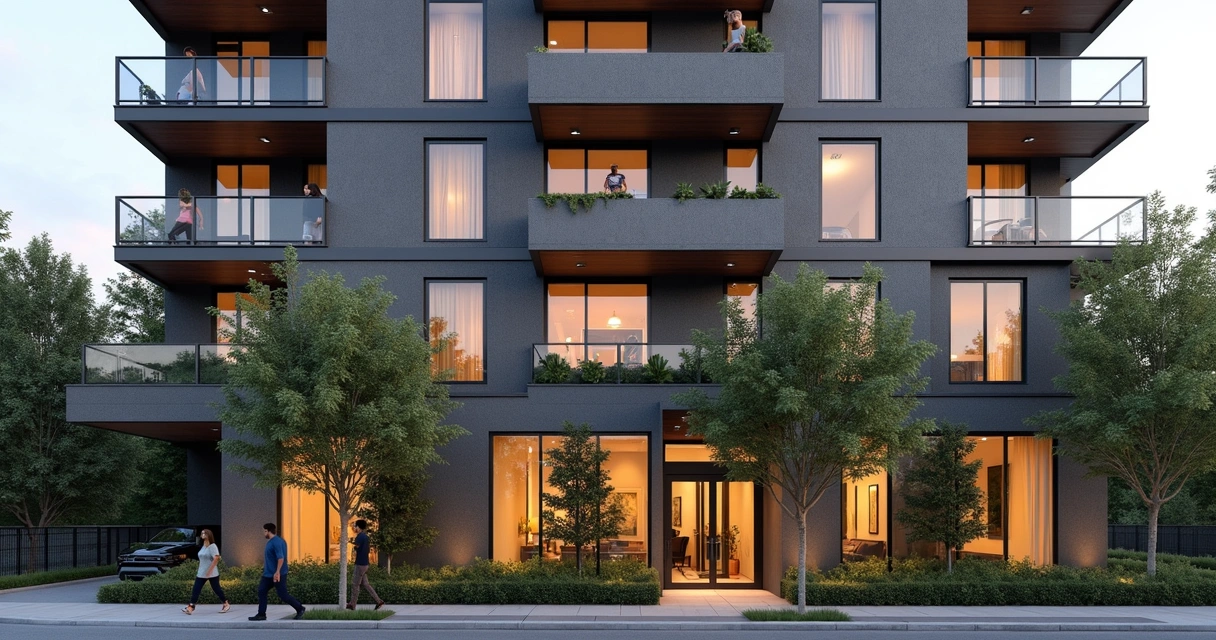
Now comes the moment that separates professionals from adventurers: detail. The legal project is that set of drawings, memorials, and documents that will be sent and analyzed by municipalities or competent bodies, basically to ensure that no one is thinking of building a pyramid on the side of the central square. It must clearly show circulations, accesses, volumes, spaces, heights and respect all allowed indents and occupations.
The executive phase, on the other hand, goes further: this is where each corner, installation, system, and material is truly specified. It's no longer enough to draw “a square is the bedroom”, now it's time to say what the plinth, the thickness of the doors, the type of window, where each wiring runs and so on.
Mistakes here are expensive and make everyone lose their minds (and money). The precision of the details can guarantee whether the work will be linear or an impromptu show.
Designing without detailing is like buying a puzzle without knowing if the pieces fit together.
Do you remember what it was like to draw by hand, erase and redesign everything just because the customer decided to move a door? Well, digital tools changed everything. It is no longer possible to imagine, in the middle of 2024, creating projects with only rulers and scalimeters. New technologies have arrived to simplify, accelerate and provide much more quality!
The acronym BIM (Building Information Modeling) ceased to be a hype and became routine for those seeking a more collaborative and detailed result. BIM tools allow you to create information-rich 3D models, where changes in plans are immediately reflected in cuts, facades, and quantities. And it doesn't stop there: by integrating data and simulating different situations, it is much easier to predict interferences, rationalize costs, and avoid unpleasant surprises in execution.
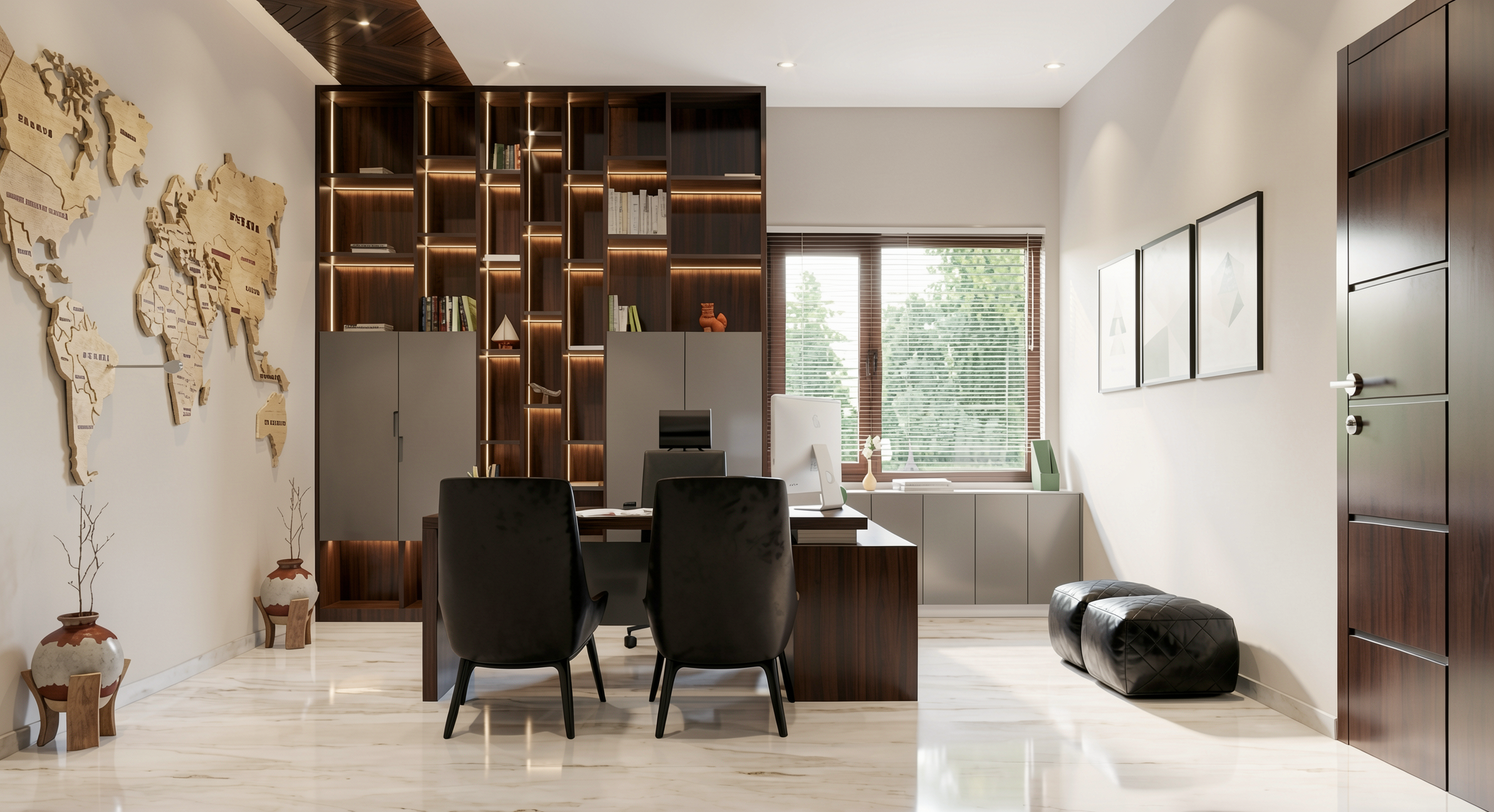
With the arrival of artificial intelligence, the scenario became even more interesting. Platforms like Redraw have redefined the way of visualizing and communicating ideas. In a matter of seconds, it is possible to generate realistic views of the environments, enhance low-quality images, create renders for presentation to the client, or transform sketches into images that practically “jump” off the screen. All accessible directly from the browser, without the need for supercomputers or crazy installations.
The result? Much more impactful, faster presentations with that “wow effect” that wins customers and approvals.

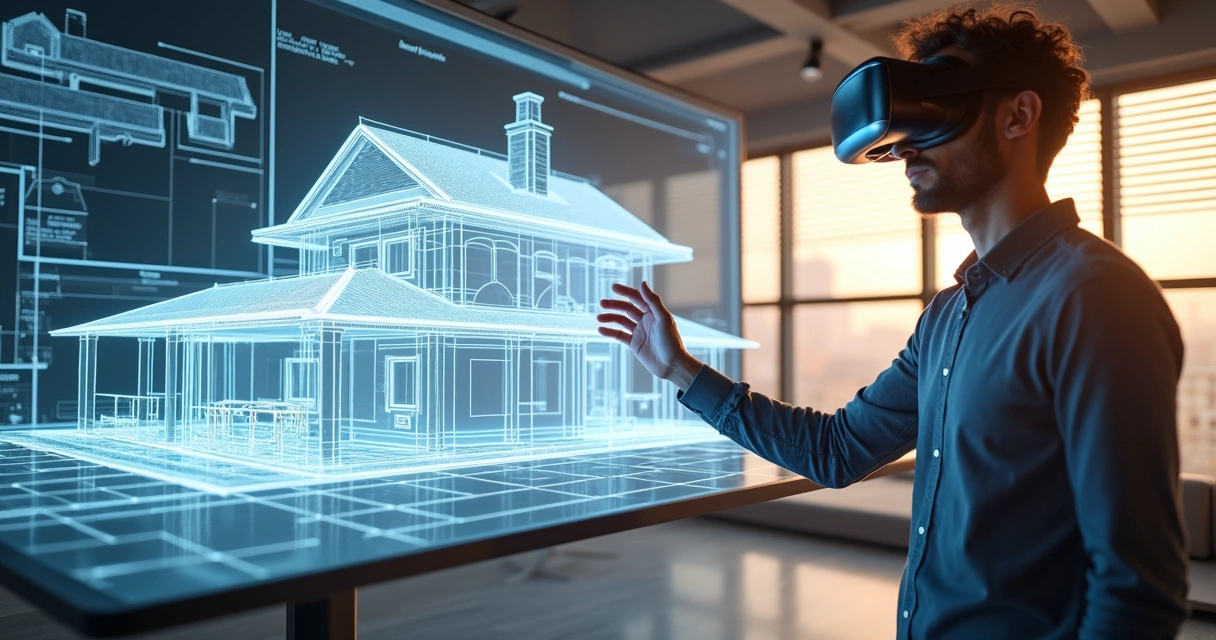
Have you ever thought about being able to “walk” inside your future apartment or office before it even came off the ground? With advanced three-dimensional modeling, it is easy to simulate colors, textures, lighting and furniture, in addition to testing circulation and ergonomic solutions.
The virtual reality glasses and immersive environments allow both the client and the professional an almost tactile experience of the designed space. This immersion reduces those typical doubts such as “will it be small?” or “does this color match the floor?” , solving in advance questions that could only appear in the completed work (and then it's too late, right?).
And of course, this whole process isn't just about enchanting or impressing. It considerably improves communication between designers, engineers, and clients and reduces the margin of error in interpretations.
Clear visualization, less expensive surprises.
Let's be honest: quality architecture is not born out of thin air, nor is it a divine gift. It is the result of a lot of technical training, sensitivity, experience and constant updating. Choosing the professional who will sign your home, office or business is almost as important as deciding where to live or invest.
Always look for an architect or engineer registered with the class council (CAU for architects and CREA for engineers), a consistent portfolio and good references. Assess the professional's posture during initial conversations. Does he really listen to you or does he just want to sell you a ready-made model? Are you willing to explain the reasons for each solution?
Ultimately, the project is your time, your money, and your dream at stake. Then it's worth researching properly.
A good professional avoids works that become an eternal WhatsApp group meme.
It seems impossible, but even well-intentioned projects can slip into classic traps. Some of them happen out of carelessness, others out of haste, and many, amazingly, out of overconfidence. Let's list some stumbling blocks that you'll want to keep out of your way:
In the end, to err is human, but to err out of unpreparation is a choice. Those who invest time in the right steps and invest in technologies such as Redraw arrive at the end with less headaches and more satisfaction.
A good project is a project that provides solutions before problems appear.
The value of rendered project depends on variables such as total area, type of use, complexity of the solutions, level of detail and, of course, the experience of the professional or office. In practice, there are three common forms of budgeting: per square meter of the project, percentage of the cost of the work, or closed price after analyzing the scope. It's worth remembering: projects with advanced technologies, realistic renderings and greater detail tend to have slightly higher values, but they save a lot during execution, avoiding rework.
The architect is focused on the design of spaces, on functional and aesthetic solutions, on environmental comfort, and on the adaptation to urban legislation and accessibility within Render architecture. The engineer, in turn, provides structural and technical vision, ensuring the physical viability and safety of the building. In ideal situations, the two professionals work together. The architect develops the architectural project, while the engineer develops complementary ones, such as structure, electrical and hydraulic.
Absolutely. Using Redraw allows architects, engineers, and clients to visualize environments with much more clarity, even during studies and preliminary projects. The platform generates ultra-realistic renders and enhances images quickly, allowing for more accurate assessments and safer decision-making. In addition, the intuitive interface does not require robust computers running directly from the browser, which speeds up and democratizes access to the visualization of high-end projects.
It is the set of plans, drawings, memorials, and technical specifications that define the design of a building, house, or built space. It guides all construction professionals, details internal and external spaces, materials, construction systems, and guarantees compliance with urban planning and safety regulations. In essence, it is a manual that transforms ideas into reality, guiding execution from start to finish.
The typical process includes: data collection and terrain study, needs program, preliminary study, preliminary design (with conceptual drawings and volumetry), legal project (for approval by the city hall), executive project (complete detail), compatibility with complementary projects (structure, electrical, hydraulic) and final revision for adjustments according to the work. Each phase has deliverables and revisions essential for successful construction.
For legal approval and execution of a building, it is necessary to submit floor plans, detailed cuts and facades, location on the land, area charts, descriptive memorial, ART or RRT by the professional, implementation study, complementary projects (structure, electrical, hydraulic, fire prevention), material spreadsheet and, in some cases, electronic images or models. The list may vary depending on local government requirements.
Among the most common technologies are BIM platforms, three-dimensional modeling software, artificial intelligence rendering (such as Redraw), virtual and augmented reality, automated compatibility systems, and digital presentation tools. All of these new features help to predict interferences, reduce failures, and bring more clarity to professionals and clients.
At the end of this guide, it's clear: architectural design is much, much more than a bunch of lines and symbols that are difficult to understand. It combines technique, creativity, study, legislation and, yes, patience to adjust dozens of details to achieve the ideal result. Using solutions such as Redraw streamlines, simplifies and enhances each stage, from conception to final presentation.
If you are thinking of bringing your dream to life, building, renovating or even reinventing your spaces, invest in quality, information and cutting-edge technology.
Don't risk it, design with someone who understands. When in doubt, choose the Redraw and see your future in high definition.
Discover Redraw's solutions now and discover how to make your architectural project memorable, efficient and surprising from start to finish.
Blog

The AI that transforms how you create architecture, engineering and design projects.
Redraw ai solutions LLC