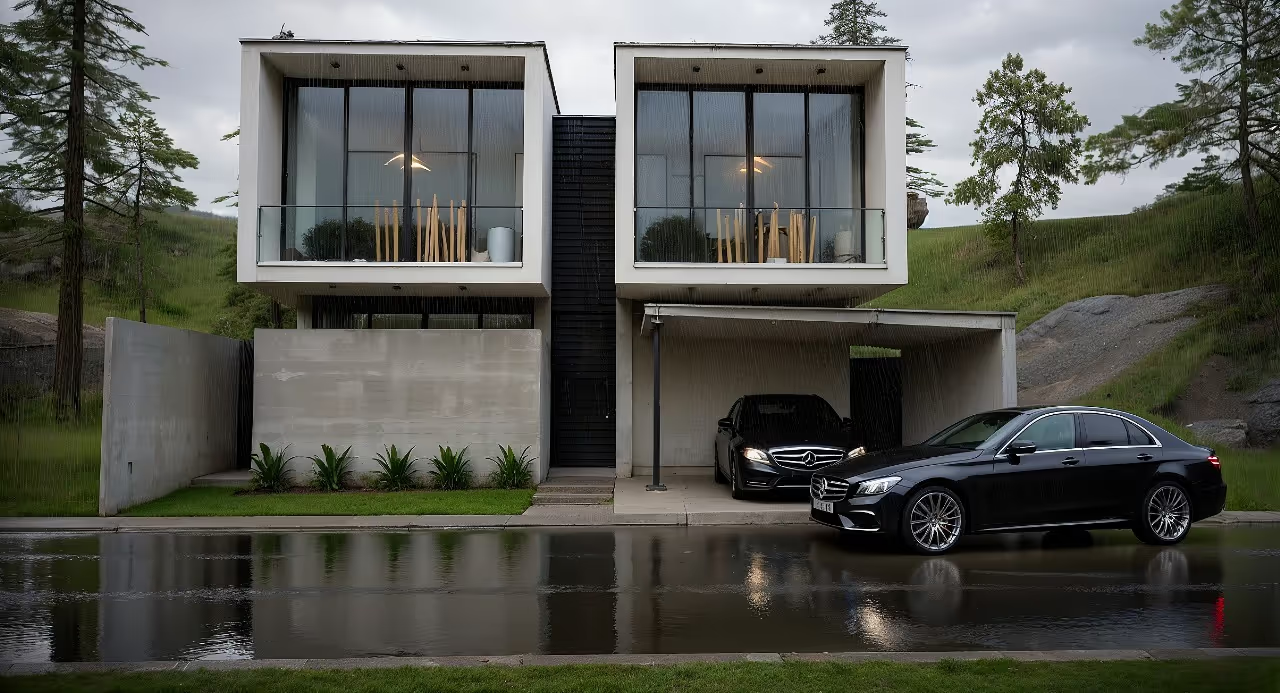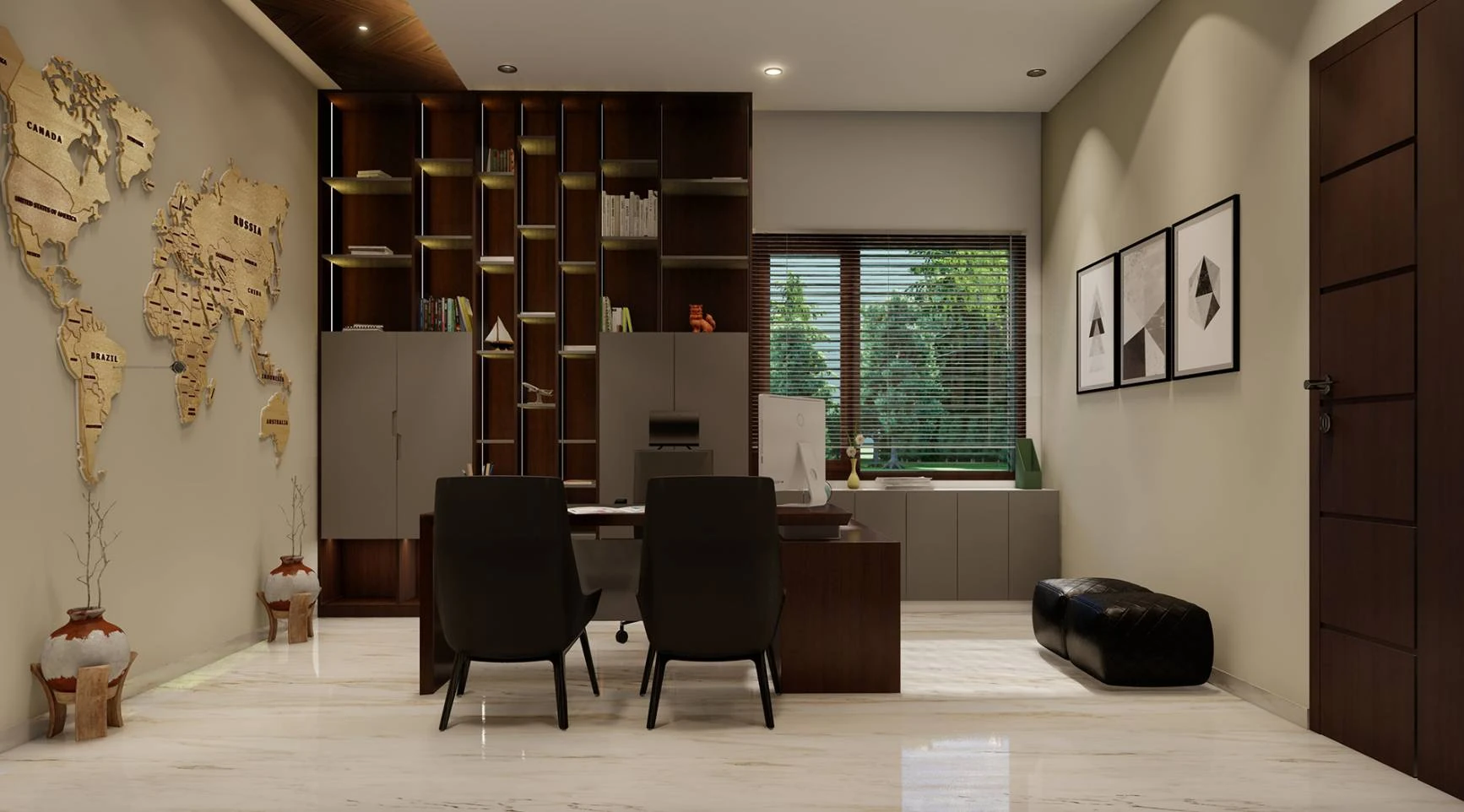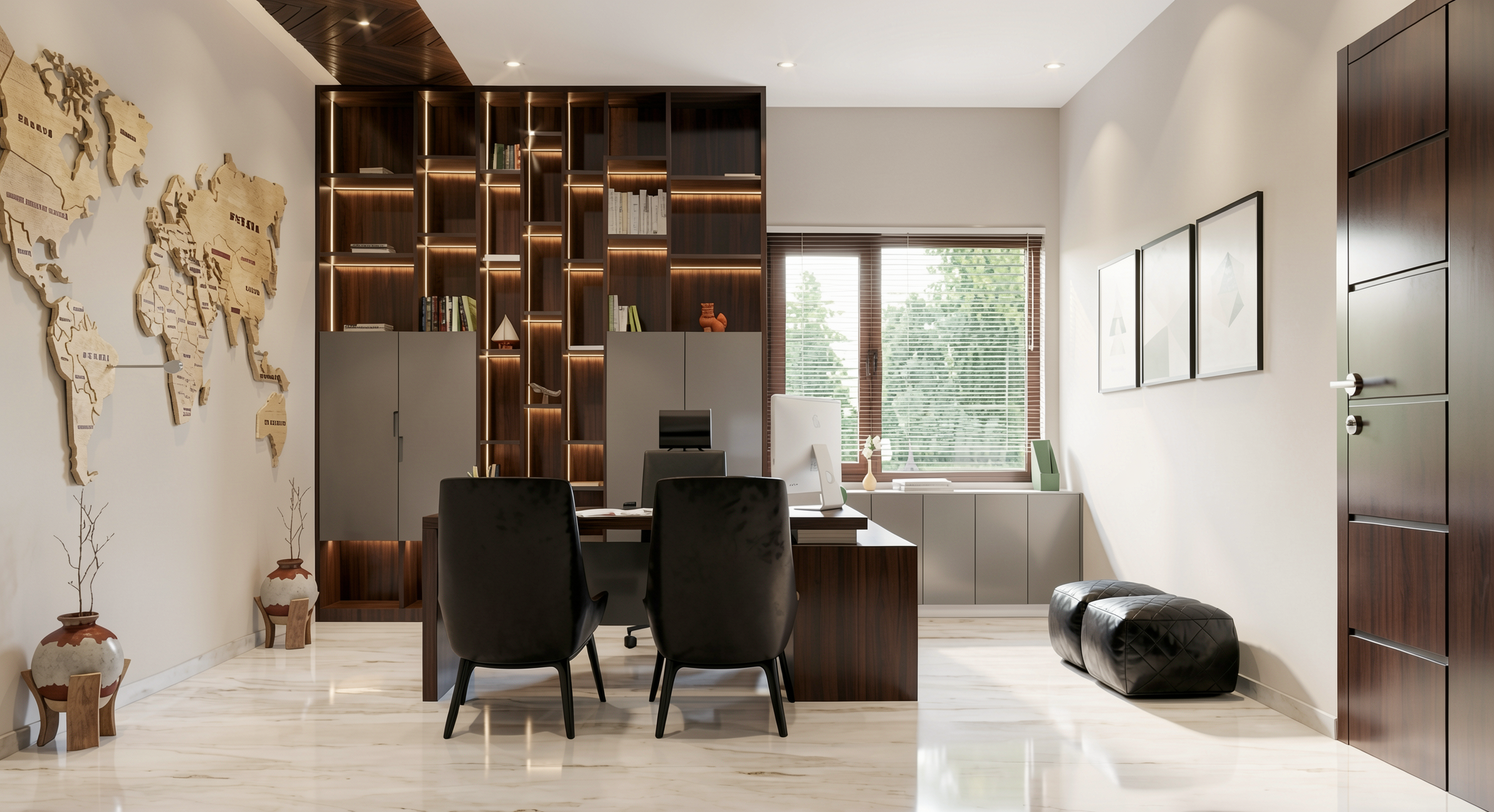
How to render an image is the question that hangs in the minds of architects, engineers and designers who have sweated a lot in SketchUp, Revit or Promob and now want to show their projects with another level of realism. Imagine revealing that gourmet kitchen of your dreams, but without crashing your computer or needing an 80-page manual just to install the renderer. Welcome to the world of artificial intelligence, where platforms like Redraw make everything more accessible. Spoiler: you can transform that simple sketch into an almost Instagram-worthy rendering with two clicks. If you want to see beautiful and fast rendering, stay here and discover Redraw.
Why rendering has become essential to your project
Back in the day, showing a project was synonymous with an A1 plank, ruler, and that plot smelling like toner. Today, the customer already arrives asking: “Is it possible to see in 3D?” The visual sells, and transmitting the concept of environment, materiality and lighting has become almost the rule. Renderings go beyond aesthetics: they help non-technicians to visualize the space, facilitate adjustments before the work and avoid disagreements later. It's not an exaggeration. A good rendering can be the difference between closing the project and listening to that dreaded “then we'll see”.
What you need to have before rendering an image
Before thinking about hyperrealistic effects, shadows, or textures, you need some basic items:
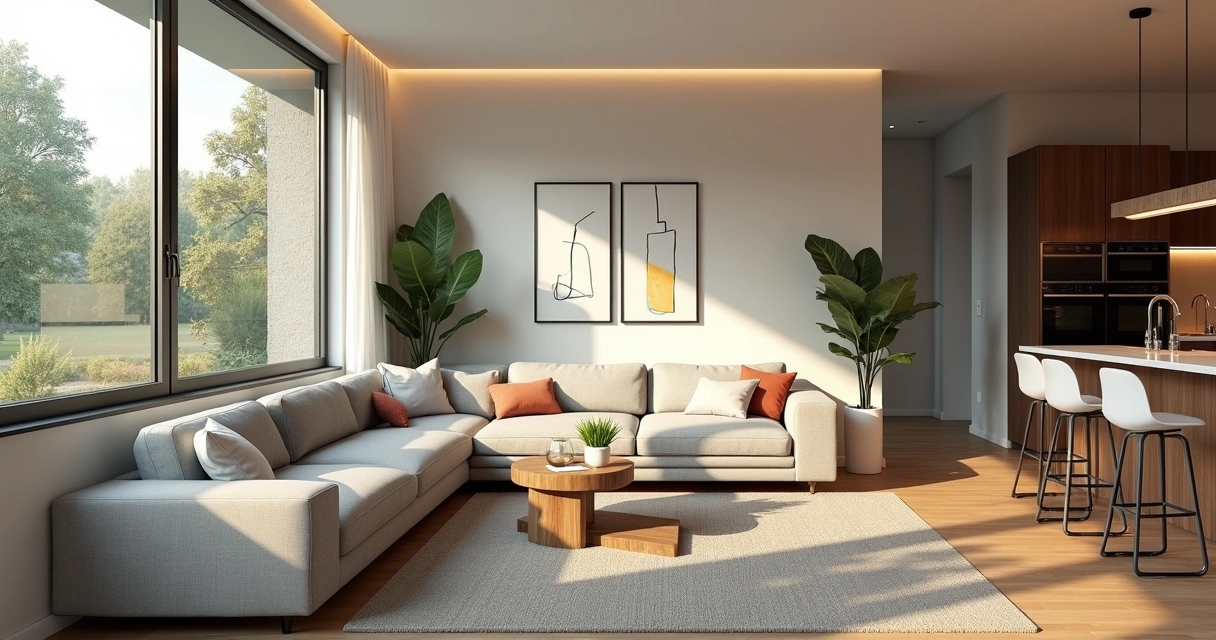
A 3D model, whether from SketchUp, Revit, or another program
Minimally applied materials and textures
An idea of the lighting you want to convey - natural, artificial, or both
(And yes, a desire to try something new, because AI changes the game)
Methods for rendering an image
Classic plugins and traditional renderers
If you've ever tried to render on a computer, you've probably stumbled across famous plugins. They deliver good results, especially for those who are already used to tinkering with light configurations, materials, and cameras. The less glamorous side? You can spend hours adjusting just to see the computer choke when the deadline is up.
AI tools for rendering (Redraw included)
We arrived at the plot twist: artificial intelligence promises to save time and, frankly, patience. Platforms like Redraw do all the processing in the cloud. This eliminates that painful wait and, even better, doesn't require a top-of-the-line PC. You submit the file, choose the style, approve details and voilà — your rendering arrives quickly, beautifully and ready to present. It has filters, animation options, and it even generates automatic videos if you want to really impress. And that, let's face it, is a relief for those who are tired of hearing the notebook fan complain.
How to render an image without losing quality
Render quality doesn't just depend on a beautiful pixel. Do you want to avoid washed out or unrealistic results? Pay attention to these points:
Use realistic textures and avoid those plated surfaces
Adjust the lighting, trying to simulate real ambient conditions
Check proportions: tables, chairs, lamps, everything needs to “talk”
In Redraw, test different styles and levels of realism with quick previews
Less is more, but less poorly done becomes a meme.
Average rendering time and how to speed up the process
Classic renderers can take minutes or even hours - depending on the complexity of the project and the power of your computer. With AI, on the other hand, the process is almost instantaneous, because everything takes place on the remote server. That is, while you are having a coffee, your project is almost ready and ready for the client to approve.
Quick previews
Fine tune without wasting time rendering everything again
In Redraw, rendering only takes a few seconds, no matter the PC
Your customer won't even have time to ask if it's ready yet.
Frequently Asked Questions
What does it mean to render an image?
To render is to transform the raw 3D model into a detailed image, simulating light, shadow, and materials. It serves to make the project more comprehensible and visually appealing.
How to use AI to render images?
You upload your 3D file to a platform like Redraw, adjust style preferences, lighting, and that's it. AI does all the heavy lifting in seconds, without depending on the local machine.
What are the best rendering sites?
There are several platforms, but Redraw stands out for its speed, ease of direct use in the browser and impressive results achieved with artificial intelligence.
Is rendering an image with AI safe?
Yes. Serious platforms like Redraw offer secure storage, data encryption, and respect for the privacy of projects sent to the cloud.
How much does it cost to render images with AI?
The values vary depending on the features and number of images. In Redraw there are paid plans, but the price pays off for the time and the final result. Consult our platform and choose the one that's best for you.
Next steps...
If you're still thinking about how to render that impactful image without complication, the time to test what AI can deliver is now. With Redraw, it doesn't need installation, requires no expensive hardware, and the learning curve is almost invisible. Experiment, compare your own results, and see the difference in your projects and customer reactions. Do you want to start right now? Get to know Redraw and take your images to the next level.
In the Redraw universe, Coins Are the currency that drives your creativity. They work like credits that allow access to all of the platform's powerful artificial intelligence tools, from rendering images to creating videos. Understanding how coins work is essential to optimize your projects, ensure the best use of your plan and, consequently, achieve extraordinary results.
In this article, we will dive deep into the Redraw coin system, clarifying the main questions and offering valuable tips for you to get the most out of the platform.
Monthly Renewal: How Does Your Coin Cycle Work?
One of the main features of the Redraw coin system is its Monthly Renewal. This means that, each month, your coin balance is reset and renewed according to the contracted plan. For example, if you signed up for the plan on the 15th, the 15th of the following month, your coins will be renewed.
It is important to note that the coins They are not cumulative. In other words, if you don't use all your coins within one month's cycle, they won't be transferred to the next. Therefore, it is essential to plan the use of your coins to get the most out of your investment.
All Generations Are Billed: Understand the Cost of Processing
It is essential to understand that Do all generations carried out on the platform consume coins, regardless of the final result. Even if an image does not reach the desired quality, the processing has already been carried out and, therefore, the cost in coins is debited from your account.
Redraw does not offer refunds for generations that were not satisfactory. However, if an error occurs on the platform and the generation is not completed, but coins are still charged, you can and should contact the support team to resolve the issue.
To avoid wasting coins, we recommend that you carefully review the settings of each tool before generating an image or video. If you have questions, don't hesitate to contact support for guidance and to ensure that you're using the best options for your project.
Generations Statement: How to Track the Use of Your Coins
To facilitate the control and management of your coins, Redraw offers a Detailed extract of all your generations. To access it, simply click on your profile, in the upper right corner of the screen, and select the option “My Redraw Coins”.
In this section, you'll find a complete history of all your transactions, including:
The date of each generation
The tool used
The cost in coins of each operation
This functionality is extremely useful for you to understand how you are using your coins, identify possible optimizations and, if necessary, contact support with accurate information about any problem or question.
Conclusion: Optimize Your Workflow and Boost Your Results
The Redraw coin system was designed to be simple, transparent, and efficient. By understanding how monthly renewal, billing per generation, and statement of transactions work, you'll be better prepared to optimize your workflow, avoid waste and, most importantly, enhance your results.
Remember that the Redraw support team is always on hand to help you get the most out of the platform. Don't hesitate to contact them to answer questions, get tips, and ensure that your projects reach a new level of quality and realism.
What is Technical and Architectural Design and Why Is It Crucial?
Technical and architectural design: the universal language of construction. If you still think they're just lines and symbols on a piece of paper, get ready to unravel the complexity and precision that transforms ideas into solid, functional structures. There's no use running away, this is the alphabet of engineers, architects and designers, and knowing how to master it can be the difference between an award-winning work and a structural cucumber.
And before you think that you only need to be able to doodle on a notebook sheet to do well, know that technical drawings are serious documents that follow norms, standards and require millimeter precision. Not only do they communicate information between different professionals at the construction site, but they also serve as a record for the entire history of the building. So imagine being able to transform your sketches into professional projects quickly, right in the browser, without installing anything heavy on the computer, and even rendering in seconds? Well, Redraw is here to show that yes, it can make this process less painful and much more intelligent.
If you want to win clients, approvals from public agencies, and real productivity, we have news: mastering architectural design is not optional, it's almost a rite of passage. And while you're here, take the opportunity to learn about Redraw's innovative solutions and test in practice how technology can boost your projects.
Lines may just be lines, but in the right design, they become monuments.
Most Common Types of Technical and Architectural Drawings
Those who think that there is only one type of technical design in architecture or engineering are mistaken. If you've ever been at an office desk, you know that each sheet has a specific function and a story to tell. Let's get to know the main types that appear in projects, and try not to get lost in the midst of so many names and functions.
Floor plans and cuttings
The floor plan is probably the first drawing that comes to mind when you hear about the project. It is the graphic representation of the building seen “from above”, as if you were looking at a building cut horizontally 1.50 m high. It is in it that we see walls, doors, windows and the layout of the environments. The cut, as its name suggests, is the design of the building “sliced” vertically. The goal? Reveal heights, ceilings, and even details hidden behind walls.
Floor plan: organization of environments, location of doors, windows and furniture.
Cut: shows heights, floor levels, structure, and interior details.
Both are fundamental to any project. Without them, no one knows where the sofa goes or how far the ceiling height of your living room is.
Elevations and construction details
The elevations are the “photographs” of the facades, presented in an orthogonal view, showing what each face of the building will look like. They reveal materials, openings, heights, and even minor embarrassments of that wall that you swore no one would see. The construction details, on the other hand, are enlarged drawings of complex parts. Do you know that connection between the guardrail and the slab? The attachment of the aluminum frame? All of this requires large scale drawings and a thorough explanation.
Elevation: shows the external face of the project, with indications of materials.
Construction detail: expands and explains specific solutions, such as connections and finishes.
Notice that, without elevations, the building only exists in the imaginary. And without details, the work becomes a riddle... with a great chance of going wrong.
Perspectives and renderings (with support from Redraw)
If there is a way to delight clients and translate the project into reality, it's the perspectives and rendered images. Nothing touches the imagination more than seeing environments in 3D, with textures, lighting and that famous “WOW effect”.
The difference between a handmade concept image and a digital rendering lies in the clarity of the details. And let's be honest, rendering environments has never been faster than it is now. Platforms like Redraw allow you to create, improve, and animate illustrations in minutes, right from the browser, even for those who don't have a powerful computer or time to waste installing heavy programs.
Perspective: realistic three-dimensional visualization of the environment.
Rendering: digital representation with light effects, shadows, colors, and materials.
With the support of Redraw, saving time and professionalism has never been more possible. Transform your sketches into magazine-worthy presentations, even if your specialty is still the HB pencil.
Modern Tools and Software for Technical and Architectural Design
The moment of truth has arrived: you might like the smell of baking paper and the sound of graffiti scratching, but software dominated the architecture scene a few years ago. The programs do much more than straight lines and perfect curves: they detect problems, optimize working time, and even create Oscar-worthy images to impress that indecisive client.
Not sure where to start? Sit that here comes history (and technology).
AutoCAD and Revit
When it comes to traditional software, AutoCAD is the first name that appears in the collective memory of professionals in the sector. It is almost a symbol of the digital revolution in offices, allowing for precise technical drawings, varied layers, blocks and hatches. You can create layout, insert dimensions, and even organize all project documentation.
On the other hand, Revit introduced the concept of Building Information Modeling (BIM), where in addition to the lines, virtually the entire building is modeled, including material, structure, hydraulic and electrical data. With Revit, each wall, door, or window becomes an intelligent entity, facilitating adjustments and the exchange of information with the team involved. No rework for forgetting updates, because a change reflects on everything automatically. And among us... who hasn't missed that during those late nights of project review?
AutoCAD: Develops 2D drawings with precision, versatility and wide adoption in the market.
Revit: BIM platform that centralizes project information in a 3D virtual model.
They are excellent choices for those looking for precision and detailed documentation. And if you get lost in layers, welcome to the club of stressed architects.
SketchUp and Promob
SketchUp is the great friend of architects who like to “see to believe”. Its simple and intuitive interface is perfect for creating three-dimensional models without burning neurons. From homes to furniture, everything can be modeled and visualized quickly, and it's still easy to show the ideas to the client, even the one who never understands anything looking at a 2D plan.
Promob, on the other hand, appealed to those who work with interiors and planned furniture, providing their own tools for detailing cabinets, kitchens and commercial environments. It allows you to simulate textures, wood patterns, metal structures and even measure the elements that the joiner will need millimetrically. All it takes is a little practice and, suddenly, you're already creating environments that seem to have come straight out of imported catalogs.
SketchUp: Fast 3D modeling for viewing and presenting projects.
Promob: Focus on indoor environments and furniture, fine detailing.
Both accelerate the creation of three-dimensional environments, and are perfect for those who can't bear to explain for the umpteenth time that that rectangle on the floor plan is really a sofa.
The Importance of Accuracy and Standardization in Technical Design
Poorly done drawings are just as dangerous as poorly executed works. A simple scaling error can turn a wall out of place, a crooked window opening, or an impossible ladder to climb. Precision in architectural design is not a luxury: it's a must. After all, each line has real consequences on the construction site.
What the pencil doesn't solve, the sledgehammer complicates.
This is where the technical standards come in. They ensure that everyone “speaks the same language” in the project, avoiding misinterpretations that end up becoming losses, delays, and headaches. In Brazil, architectural technical drawings follow the ABNT (Brazilian Technical Standards Association), which disciplines everything from symbology to sheet shapes, line thicknesses, and colors. Don't think it's too much red tape, it's professional survival.
It standardises communication between architects, engineers, builders, and suppliers.
Avoid rework and confusion in the execution of the work.
It guarantees greater ease in approvals, licenses, and legal registrations.
When following standards and seeking precision, the risk is minimal and the result is always better. After all, who has never been bitterly surprised to see their dream project being adapted because they “forgot” a detail in the drawing?
Common Errors in Technical and Architectural Drawings (and How to Avoid Them)
If every project were error-free, let's say that construction companies would sell less headaches and more success. But it's not always simple. Some slip-ups are classics in the world of architectural designs and are often expensive.
Here's a short list of lapses that could compromise your project:
Incorrect scale: Representing wrong measurements can become a tragedy at the time of execution. Always review before printing.
Mistaken symbology: Inventing symbols “your way” only complicates the lives of those who read your drawing later. Always use recognized norms and standards.
Omission of details: Lack of quotas, lack of information about materials, or forgetfulness to indicate levels make the project the subject of doubts and reworks.
Lack of updating: Adjusted one wall but didn't update the other drawings? This is the beginning of a catastrophic domino effect, especially in complex projects.
Disregard technical standards: Ignoring standardization may mean refusals in public bodies or even fines and demands for subsequent correction.
How to avoid all this? Constant review is needed. Use checklists, ask colleagues to analyze, don't just rely on your memory. And, if you want to save time and guarantee quality, modern platforms such as Redraw already offer tools for verifying, improving, and even transforming simple drawings into professional images.
Trust the details. They decide everything.
FAQ: Frequently Asked Questions about Technical and Architectural Design
What is technical and architectural design?
Technical and architectural drawing is the accurate graphic representation of architectural, engineering, and design ideas. It transforms concepts into standardized illustrations, allowing everyone involved in the project to understand dimensions, materials, shapes, and spatial relationships. Its main function is to ensure that the project gets off the ground faithfully and safely, using clear and universal conventions.
What software to use to design projects?
The main software are AutoCAD, aimed at 2D drawings, and Revit, which allows the modeling of construction information (BIM) in 3D. SketchUp is excellent for quickly designing models, especially in architecture, while Promob is focused on indoor environments and planned furniture. Tools like Redraw also help with renderings, visual enhancement, and optimization of the project presentation process without requiring large computer resources.
How to learn architectural design from scratch?
It is possible to learn architectural design through online courses, technical books, and lots of practice. Start by understanding the basic rules of representation, symbols, and scales, then move on to digital drawing software. Platforms like Redraw help even those who are just starting out, transforming simple sketches into realistic images. Tip: study ready-made projects and try to reproduce plans, cuts, elevations and, above all, pay attention to details and regulations.
What is the difference between technical and artistic drawing?
The technical drawing is carried out following strict rules and standards, always with precision and clarity. It serves to instruct construction, fabrication, or assembly and leaves no room for subjective interpretation. Artistic design, on the other hand, is free, seeks to express emotions, ideas and creativity, without commitment to accuracy or faithful representation of measures and proportions. In short: technical is used to build, artistic to inspire.
Is digital architectural design better than manual?
Digital drawing facilitates quick adjustments, revisions without loss of quality, realistic image creation, and instant sharing. The manual may be more expressive at first, but it loses in precision, agility, and standardization. Today, with resources such as those of Redraw, which allow you to create, render and animate drawings directly in the browser, digital technology has gained space and solves problems that the manual could never achieve (such as integrating remote teams and reviewing in real time). Therefore, for the professional market, Render architecture and the digital one is irreplaceable, although the manual is still great for drafts and training.
Conclusion: Enhance Your Projects with Quality Technical and Architectural Design and Redraw Technology
Few fields mix as much art, science, rigor, and creativity as technical and architectural design. It's not just about lines and angles, but creating bridges between ideas and constructs. Precision, respect for standards, and the use of the right tools transform each project into something feasible, beautiful and safe.
And those who follow the technological revolution know that it no longer makes sense to waste time with very traditional processes. With platforms like Redraw, professionals from all fields can create, improve, and present projects with speed, clarity, and real visual impact, without needing powerful computers or sleepless nights waiting for the rendering to finish.
To design well is to predict, and prevent, the error before it happens.
Therefore, if you want to be part of the professionals who deliver more, better and with an impeccable look, take advantage of the best of technology. Try Redraw and discover how to simplify your workflow and win customers with images that speak for themselves. Because a good project is one that everyone understands. And what enchants already on paper, or rather, on the screen. Come to Redraw and transform the way you design!
What is an architectural project and what is its importance?
Architectural design: the backbone of any successful construction. If you think that a project is just a collection of blueprints and technical doodles, I suggest rethinking. A well-designed plan is what transforms dreams into solid walls. Better yet, it avoids that classic scenario of headaches and extra expenses that appear out of nowhere, as if they were a negative bonus from the construction universe.
After all, no one, absolutely no one, wants to discover in the middle of the construction that they forgot a bathroom or that the master bedroom became smaller than the warehouse of materials. More than a beautiful design, it must guarantee safety, functionality, comfort and, of course, compliance with urban planning legislation. And here among us, a project carried out “on the olohometer” really only serves to test patience, and the pocket.
If you are looking for peace of mind, economy and professional results, investing from the start in an architectural design is not a freshness, it's a strategy. And today, with innovative platforms such as Redraw, visualizing and improving each stage has never been so accessible, fast and practical. Do you want to know how to take the risks out of the scene and put creativity and technique in charge? Read on and discover why paying attention to every detail makes all the difference in the final result.
Building without a project is like cooking without a recipe: the chance of going wrong is too great.
And while we're talking about that, take the time to discover Redraw's resources while learning more about each decisive step to transform your architectural project into a success, without unpleasant surprises along the way.
The essential steps of an effective architectural design
Forget the idea that you just have to sit down, draw a line here and another there, and voila: project ready. There is a script, almost a ritual, that must be followed to guarantee a functional, legally supported result appropriate to the client's needs and the peculiarities of the terrain. To ignore these phases is to open the door to rework, unnecessary costs, and delays. Do you want to know where to start and where to step firmly at each stage? Let's go to the realistic step by step of developing architectural projects.
Preliminary study and needs program
The start takes place even before any line appears on paper or canvas. The responsible professional must know, first of all, what the client wants and, especially, what he needs. Here, conversation is everything: understanding the profile of the residence, business or office, the routines that will take place there, the size of the environments, the flows, desires and even those family manias (who never?)
With this information, the needs program is born, literally a detailed list of environments, areas, functions, and expectations. Then research begins on local legislation, restrictions, air conditioning, luminosity, accessibility, and terrain analysis.
Initial meetings and interviews
Survey and survey of the existing land or building
Preparation of the needs program
Legal and technical feasibility studies
All of this is condensed into free sketches, short sketches, and preliminary analyses.
Preliminary draft and approval
After the diagnosis has been made, it's time to transform ideas into more concrete forms. The preliminary draft is like a “neat draft”, already taking into account footage, volumetry, relationships between indoor and outdoor environments, and definitions of materials. Plan drawings, cuts, facades and, today, even three-dimensional models are usually presented.
Customer feedback and adjustments come and go at that time. Sometimes there is a sudden desire to have a glass pool in the middle of the room and it is up to the architect to clearly show if it fits there or is it just a beautiful idea from Pinterest (who doesn't?).
When the designs reach a point of consensus and are aligned with municipal regulations, it is time to seek approval with public agencies. Bureaucracy appears, but it's a necessary evil.
Development of architectural solutions
Initial drawings: plans, cuts, facades
3D volumetric design illustrating the concept
Presentation to the customer for validation
Compliance with current regulations and legislation
Legal and executive project
Now comes the moment that separates professionals from adventurers: detail. The legal project is that set of drawings, memorials, and documents that will be sent and analyzed by municipalities or competent bodies, basically to ensure that no one is thinking of building a pyramid on the side of the central square. It must clearly show circulations, accesses, volumes, spaces, heights and respect all allowed indents and occupations.
The executive phase, on the other hand, goes further: this is where each corner, installation, system, and material is truly specified. It's no longer enough to draw “a square is the bedroom”, now it's time to say what the plinth, the thickness of the doors, the type of window, where each wiring runs and so on.
Preparation of final drawings and descriptive memorials
Complete executive project: architecture, structure, electrical and hydraulic installations, fire prevention, accessibility
Material lists, technical specifications, construction details, spreadsheets and quotes
Additional documentation as required by local requirements
Mistakes here are expensive and make everyone lose their minds (and money). The precision of the details can guarantee whether the work will be linear or an impromptu show.
Designing without detailing is like buying a puzzle without knowing if the pieces fit together.
Tools and technologies that optimize architectural design
Do you remember what it was like to draw by hand, erase and redesign everything just because the customer decided to move a door? Well, digital tools changed everything. It is no longer possible to imagine, in the middle of 2024, creating projects with only rulers and scalimeters. New technologies have arrived to simplify, accelerate and provide much more quality!
BIM and AI rendering software (such as Redraw)
The acronym BIM (Building Information Modeling) ceased to be a hype and became routine for those seeking a more collaborative and detailed result. BIM tools allow you to create information-rich 3D models, where changes in plans are immediately reflected in cuts, facades, and quantities. And it doesn't stop there: by integrating data and simulating different situations, it is much easier to predict interferences, rationalize costs, and avoid unpleasant surprises in execution.
With the arrival of artificial intelligence, the scenario became even more interesting. Platforms like Redraw have redefined the way of visualizing and communicating ideas. In a matter of seconds, it is possible to generate realistic views of the environments, enhance low-quality images, create renders for presentation to the client, or transform sketches into images that practically “jump” off the screen. All accessible directly from the browser, without the need for supercomputers or crazy installations.
Automated development of 3D renderings
Generating images from texts or sketches
Converting still images into captivating animations
Cloud processing: freedom to design on any computer
The result? Much more impactful, faster presentations with that “wow effect” that wins customers and approvals.
3D modeling and virtual reality
Have you ever thought about being able to “walk” inside your future apartment or office before it even came off the ground? With advanced three-dimensional modeling, it is easy to simulate colors, textures, lighting and furniture, in addition to testing circulation and ergonomic solutions.
The virtual reality glasses and immersive environments allow both the client and the professional an almost tactile experience of the designed space. This immersion reduces those typical doubts such as “will it be small?” or “does this color match the floor?” , solving in advance questions that could only appear in the completed work (and then it's too late, right?).
Virtual explorations of the designed space
Real-time evaluation of lighting and furniture solutions
Easy to detect problems and adjust details even at the design stage
And of course, this whole process isn't just about enchanting or impressing. It considerably improves communication between designers, engineers, and clients and reduces the margin of error in interpretations.
Clear visualization, less expensive surprises.
How to choose the right professional for your architectural project
Let's be honest: quality architecture is not born out of thin air, nor is it a divine gift. It is the result of a lot of technical training, sensitivity, experience and constant updating. Choosing the professional who will sign your home, office or business is almost as important as deciding where to live or invest.
Always look for an architect or engineer registered with the class council (CAU for architects and CREA for engineers), a consistent portfolio and good references. Assess the professional's posture during initial conversations. Does he really listen to you or does he just want to sell you a ready-made model? Are you willing to explain the reasons for each solution?
Experience and specialization: each project has a profile. Residential? Commercial? Industrial? Look for similar references.
Proximity and service: projects are procedural, you want someone present and able to maintain an open dialogue.
Mastery of technologies: professionals who already use digital platforms, such as Redraw, are able to offer visualizations, adjustments, and presentations that make life (and a lot) easier for those who are investing.
Transparency in the steps and costs: no mysterious budgets or projects that do not clarify what is included.
Ultimately, the project is your time, your money, and your dream at stake. Then it's worth researching properly.
A good professional avoids works that become an eternal WhatsApp group meme.
Common architectural design mistakes (and how to avoid them)
It seems impossible, but even well-intentioned projects can slip into classic traps. Some of them happen out of carelessness, others out of haste, and many, amazingly, out of overconfidence. Let's list some stumbling blocks that you'll want to keep out of your way:
Neglecting the terrain: designing without knowing the peculiarities of the place, inclination, insolation, winds, standards, is a recipe for the problem.
Ignore the legislation: don't invent fashion with recess, template, accessibility and parking spaces. The city doesn't forgive even the 1-centimeter error.
Failures in compatibility: electrical and hydraulic installations, structure and architecture don't talk? You can expect conflicts and rework on the work.
Underestimate the budget: millionaire dreams for modest pockets. It is important to align expectations from the preliminary study and prioritize feasible solutions.
Poor communication with the client: designing is listening, explaining, presenting, and adjusting all the time. Doing “what the customer asks” without question can lead to disastrous results.
Technical outdated: resisting the use of modern tools and resources such as artificial intelligence is to assume that the competition will come out ahead.
In the end, to err is human, but to err out of unpreparation is a choice. Those who invest time in the right steps and invest in technologies such as Redraw arrive at the end with less headaches and more satisfaction.
A good project is a project that provides solutions before problems appear.
FAQ: Frequently asked questions about architectural design
How much does an architectural project cost?
The value of rendered project depends on variables such as total area, type of use, complexity of the solutions, level of detail and, of course, the experience of the professional or office. In practice, there are three common forms of budgeting: per square meter of the project, percentage of the cost of the work, or closed price after analyzing the scope. It's worth remembering: projects with advanced technologies, realistic renderings and greater detail tend to have slightly higher values, but they save a lot during execution, avoiding rework.
What is the difference between architect and engineer when drafting a project?
The architect is focused on the design of spaces, on functional and aesthetic solutions, on environmental comfort, and on the adaptation to urban legislation and accessibility within Render architecture. The engineer, in turn, provides structural and technical vision, ensuring the physical viability and safety of the building. In ideal situations, the two professionals work together. The architect develops the architectural project, while the engineer develops complementary ones, such as structure, electrical and hydraulic.
Can Redraw help me visualize my architectural project?
Absolutely. Using Redraw allows architects, engineers, and clients to visualize environments with much more clarity, even during studies and preliminary projects. The platform generates ultra-realistic renders and enhances images quickly, allowing for more accurate assessments and safer decision-making. In addition, the intuitive interface does not require robust computers running directly from the browser, which speeds up and democratizes access to the visualization of high-end projects.
What is an architectural project?
It is the set of plans, drawings, memorials, and technical specifications that define the design of a building, house, or built space. It guides all construction professionals, details internal and external spaces, materials, construction systems, and guarantees compliance with urban planning and safety regulations. In essence, it is a manual that transforms ideas into reality, guiding execution from start to finish.
What are the stages of the architectural project?
The typical process includes: data collection and terrain study, needs program, preliminary study, preliminary design (with conceptual drawings and volumetry), legal project (for approval by the city hall), executive project (complete detail), compatibility with complementary projects (structure, electrical, hydraulic) and final revision for adjustments according to the work. Each phase has deliverables and revisions essential for successful construction.
What documents are needed in the project?
For legal approval and execution of a building, it is necessary to submit floor plans, detailed cuts and facades, location on the land, area charts, descriptive memorial, ART or RRT by the professional, implementation study, complementary projects (structure, electrical, hydraulic, fire prevention), material spreadsheet and, in some cases, electronic images or models. The list may vary depending on local government requirements.
What current technologies are used in architecture?
Among the most common technologies are BIM platforms, three-dimensional modeling software, artificial intelligence rendering (such as Redraw), virtual and augmented reality, automated compatibility systems, and digital presentation tools. All of these new features help to predict interferences, reduce failures, and bring more clarity to professionals and clients.
Conclusion: quality architectural design and guarantee your work with Redraw
At the end of this guide, it's clear: architectural design is much, much more than a bunch of lines and symbols that are difficult to understand. It combines technique, creativity, study, legislation and, yes, patience to adjust dozens of details to achieve the ideal result. Using solutions such as Redraw streamlines, simplifies and enhances each stage, from conception to final presentation.
If you are thinking of bringing your dream to life, building, renovating or even reinventing your spaces, invest in quality, information and cutting-edge technology.
Don't risk it, design with someone who understands. When in doubt, choose the Redraw and see your future in high definition.
Discover Redraw's solutions now and discover how to make your architectural project memorable, efficient and surprising from start to finish.