Redraw vs Enscape: Comparativo para Arquitetos 2026

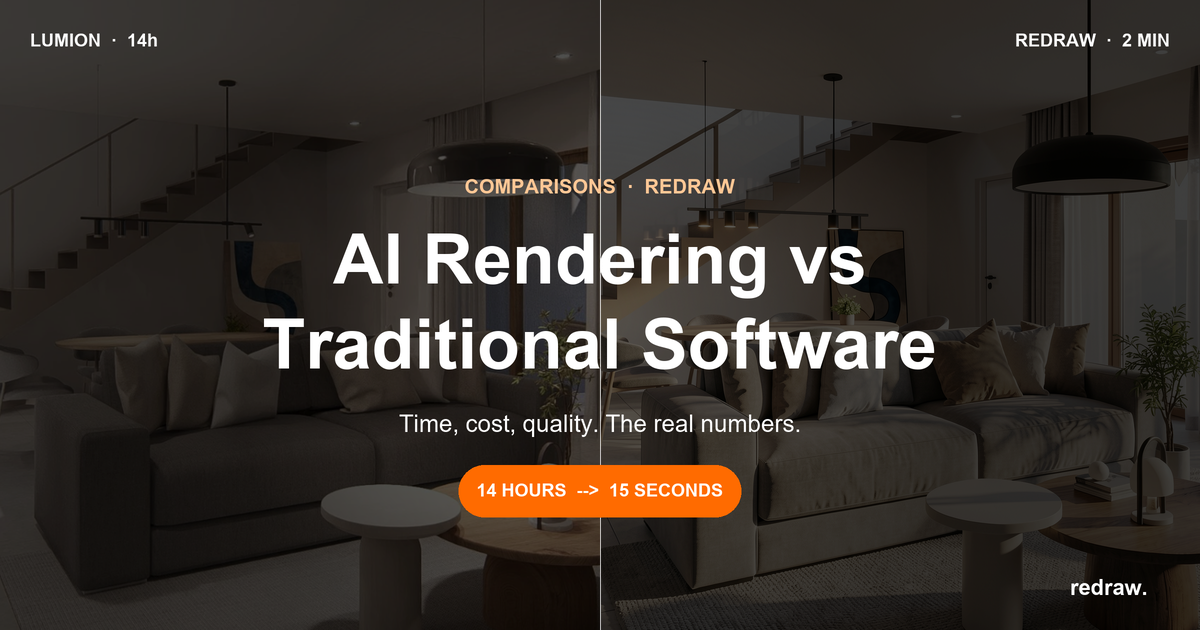
Redraw vs Enscape: renderização instantânea, mas resultados genéricos? Veja como a IA entrega fotorrealismo que o Enscape sozinho não alcança.
Redraw vs Enscape: Comparativo para Arquitetos 2026
Author
Alexandre Kuhn
Co-founder and marketing director
Alexandre is currently the marketing director, but he previously worked as an architect specializing in BIM.
Redraw vs Enscape: Comparativo para Arquitetos 2026
6 min
|
15.05.2026
Author
Alexandre Kuhn
Co-founder and marketing director
Alexandre is currently the marketing director, but he previously worked as an architect specializing in BIM.
[

Redraw

]

Create your free account

Start transforming your projects today using Redraw.

I want to register
Share this article

O Enscape tem uma proposta interessante: render em tempo real, direto dentro do seu software de modelagem. Sem esperar horas. Sem sair do SketchUp ou Revit. Clicou, renderizou. Parece ideal.

E por muito tempo foi a melhor opção pra quem precisava de velocidade sem a complexidade do V-Ray ou Corona. A Chaos Group entendeu isso e comprou o Enscape exatamente por essa razão. Era pra ser a versão rápida do ecossistema deles.

Só que velocidade sem realismo resolve metade do problema. E essa é a questão central do Enscape em 2026.

O problema que ninguém fala sobre o Enscape

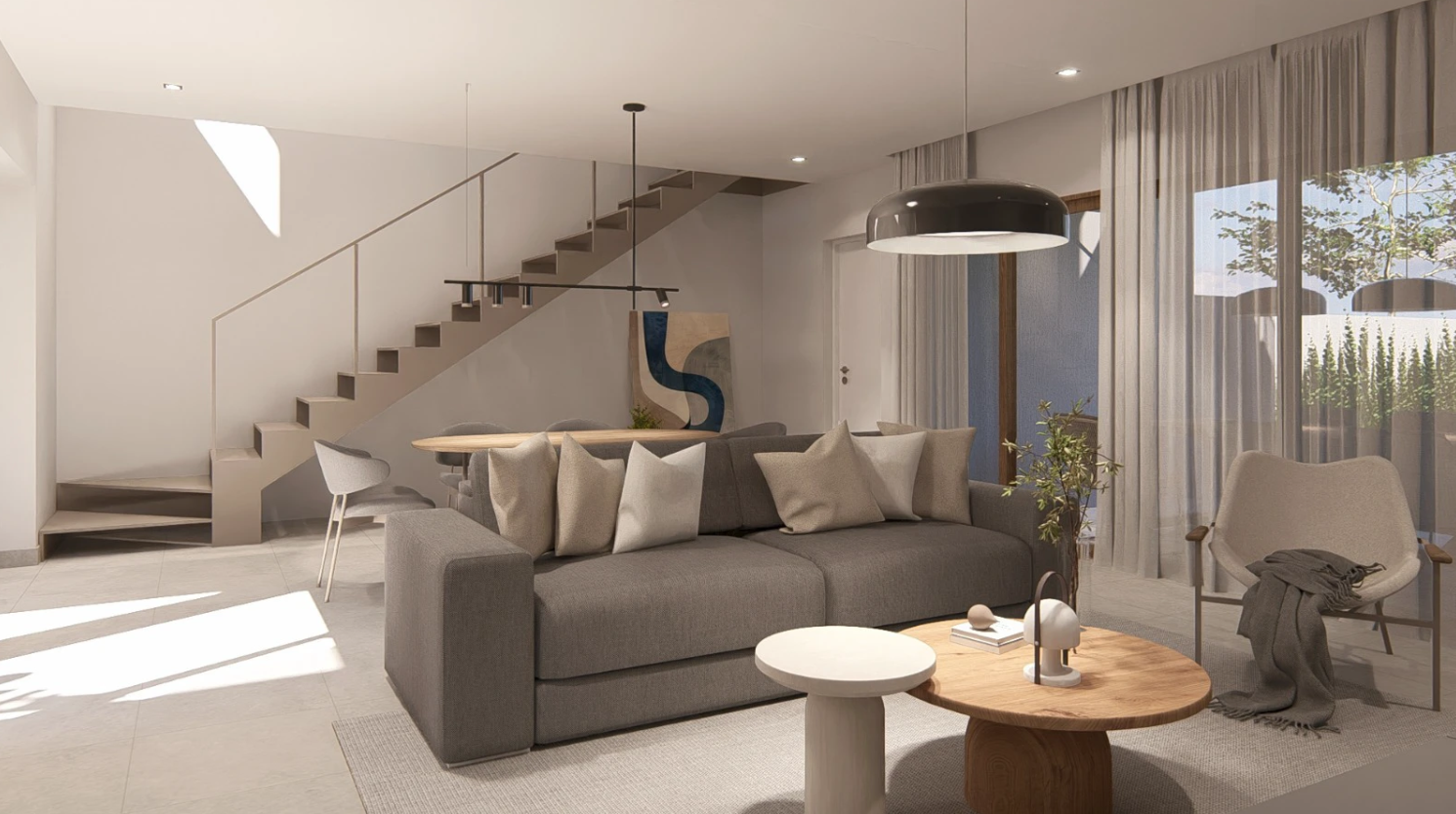
O Enscape renderiza rápido. Isso ninguém discute. Mas tenta entregar um render de interior com iluminação natural convincente, reflexos realistas nos pisos e texturas que não pareçam plástico. Vai gastar horas ajustando, testando, refazendo. E na maioria das vezes, o resultado final ainda fica com cara de "render de software". Falta aquele realismo que o cliente espera quando vê uma imagem de projeto.

Não é culpa de quem usa. É limitação do motor. O Enscape foi feito para ser rápido, não para competir em qualidade com V-Ray. A renderização em tempo real sacrifica cálculos complexos de iluminação global, caustics e bounce de luz. O resultado é limpo, é rápido, mas é genérico.

E mesmo sendo "rápido" no render, o setup não é. Você ainda precisa configurar materiais um por um, ajustar texturas, posicionar iluminação. A renderização em si leva segundos, mas a preparação leva horas. E aí entra a frustração: você gasta esse tempo todo e o resultado não chega onde você queria.

Enscape é um plugin (e isso importa)

O Enscape roda dentro do SketchUp, Revit ou ArchiCAD. Não funciona sozinho. Você paga a licença do Enscape mais a licença do software host.

Enscape Solo custa US$ 575/ano. Enscape Premium sai por US$ 635/ano. Some o SketchUp Pro (US$ 349/ano) ou uma licença Revit, e o custo anual passa de US$ 900 facilmente. Para um escritório com 3 pessoas, multiplica por 3.

E fica preso àqueles softwares. Se muda de SketchUp pra Blender, perde o Enscape. Se quer renderizar uma imagem rápida fora do escritório, sem o PC com o software instalado, não dá.

Como o Redraw resolve o que o Enscape não consegue

Aqui tem dois cenários.

Cenário 1: Enscape + Redraw (complemento)

Você gosta do Enscape, usa no dia a dia, e não quer mudar seu fluxo. Beleza. O Redraw entra como a camada que falta.

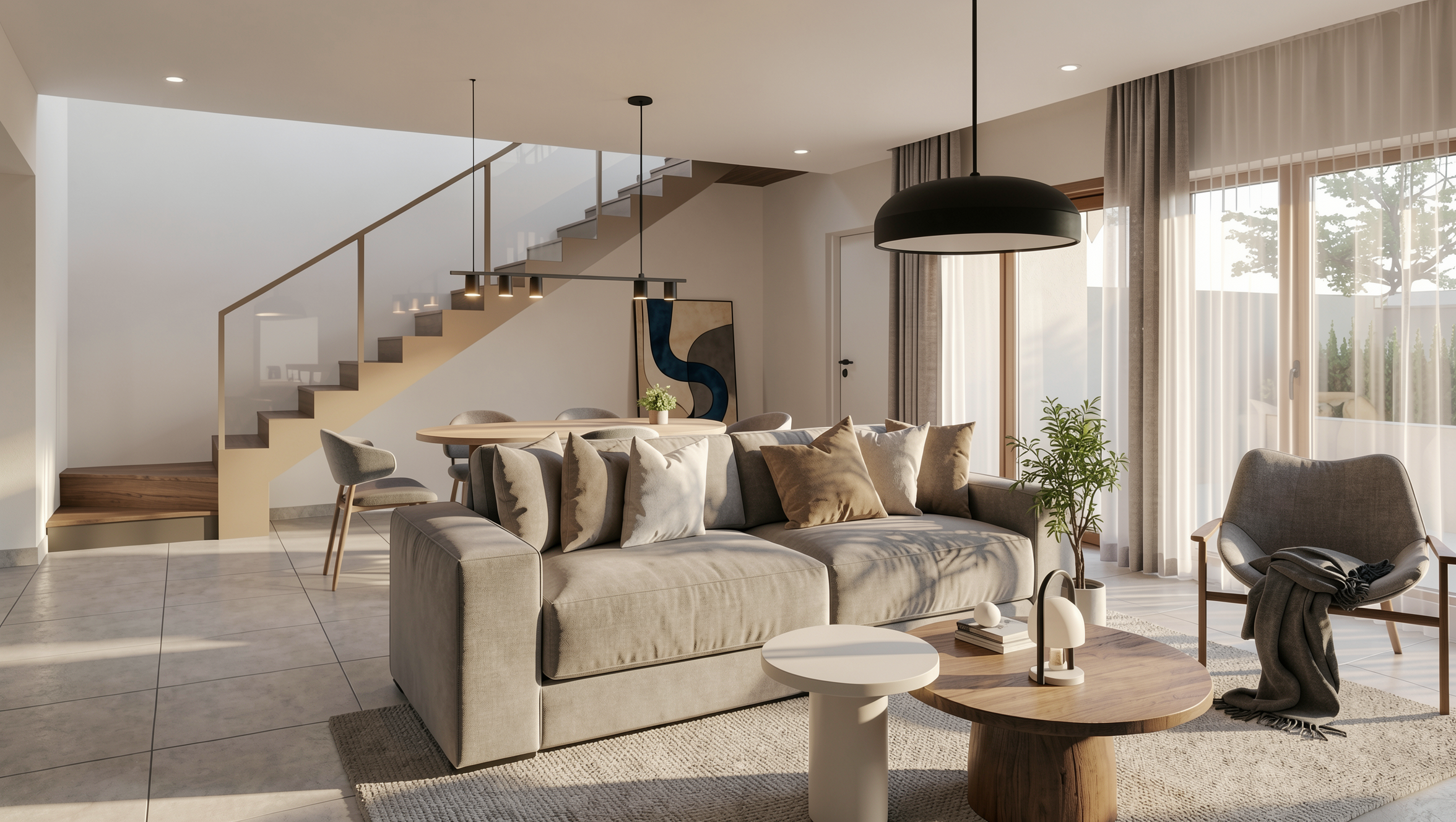
Renderizou no Enscape e ficou com cara de "render de software"? Joga no Melhorar Render do Redraw. Em 30 segundos, a IA melhora texturas, corrige iluminação, adiciona reflexos naturais e entrega aquele fotorrealismo que o Enscape sozinho não alcança. É exatamente para isso que a função foi feita: pegar o que softwares convencionais entregam e elevar para outro patamar.

O combo funciona bem. O Enscape dá a velocidade de preview em tempo real, o Redraw dá o acabamento final.

Cenário 2: Redraw sozinho (substituição)

Se o que você quer é o resultado final, sem se preocupar com horas de setup, o Redraw faz tudo sozinho. Tira um print do seu modelo 3D, sobe na plataforma, e em 20 a 40 segundos tem um render fotorrealista. Sem configurar material, sem ajustar luz, sem plugin.

E com qualidade superior ao que o Enscape entrega sozinho. Porque a IA do Redraw foi treinada especificamente para arquitetura. Ela entende como luz natural se comporta em interiores, como materiais refletem, como vegetação cria sombras. Coisas que no Enscape você tenta configurar manualmente e raramente acerta de primeira.

Comparativo: Enscape vs Redraw

CritérioEnscapeRedraw
Tempo de renderQuase instantâneo (mas setup leva horas)20 a 40 segundos (sem setup)
Qualidade do resultadoBoa, mas genérica. Falta fotorrealismoFotorrealista (IA treinada para arquitetura)
Hardware necessárioGPU dedicada, PC potenteQualquer PC com internet
Custo anual~US$ 575 (Enscape) + host (SketchUp/Revit)A partir de US$ 180/ano
Funciona sozinho?Não (plugin para SketchUp/Revit/ArchiCAD)Sim, direto pelo navegador
Configuração por renderManual: materiais, luz, câmeraAutomática: IA identifica tudo
Acesso remotoNão (preso ao PC com o software)Sim, 100% cloud
Variações rápidasInstantâneo no preview, mas requer ajustes manuais30 seg por variação
Realismo de iluminaçãoLimitado (tempo real sacrifica GI complexo)Alto (IA simula iluminação natural)

A conta

Para um arquiteto autônomo que entrega 30 renders por mês:

Com Enscape:

Licença Enscape Solo: US$ 575/ano

Licença SketchUp Pro: US$ 349/ano

Hardware adequado: ~US$ 2.000/ano (amortizado)

Tempo de setup por render: ~40 minutos (total: ~20 horas/mês)

Total: ~US$ 2.924/ano + 20 horas/mês de setup

Com Redraw:

Plano Basic: US$ 180/ano

Hardware: o notebook que você já tem

Tempo total: ~15 minutos/mês

Total: US$ 180/ano + 15 minutos

Economia de US$ 2.744/ano e 20 horas mensais. E com resultado final melhor.

Para quem está decidindo agora

Se você ainda não investiu no Enscape, teste o Redraw primeiro. Conta gratuita em redraw.pro, sem cartão de crédito. Faz seus primeiros renders e compara.

Se já usa Enscape e gosta do workflow, adiciona o Redraw como complemento. O Melhorar Render transforma seus renders do Enscape em resultados que antes só V-Ray entregava. Por R$ 80/mês.

E se está cansado de gastar horas configurando materiais para resultados que não chegam onde você quer, o Redraw sozinho resolve. Em segundos. Pelo navegador. Sem instalar nada.

Perguntas Frequentes

Enscape tem render fotorrealista?

O Enscape entrega resultados bons e rápidos, mas o motor de tempo real limita o nível de fotorrealismo. Iluminação global complexa, reflexos sofisticados e qualidade de textura ficam abaixo de motores como V-Ray. Em 2026, o Redraw preenche esse gap com IA: você renderiza no Enscape e melhora no Redraw em 30 segundos, ou substitui o Enscape pelo Redraw direto.

Posso melhorar meus renders do Enscape com IA?

Sim. A função Melhorar Render do Redraw foi feita exatamente para isso. Você sobe o render que saiu do Enscape e em 30 segundos recebe uma versão com texturas mais realistas, iluminação aprimorada e reflexos naturais. Sem precisar re-renderizar a cena no software original.

Enscape funciona no Mac?

Parcialmente. O Enscape tem versão para Mac apenas com SketchUp e algumas limitações de recursos versus a versão Windows. O Redraw funciona em qualquer sistema operacional pelo navegador, incluindo Mac, Windows, Linux e até Chromebook.

Qual é mais rápido: Enscape ou Redraw?

O Enscape renderiza em tempo real, mas o tempo total inclui ~40 minutos de configuração de materiais e iluminação por cena. O Redraw entrega o resultado final em 20 a 40 segundos, sem configuração manual. No fluxo completo de trabalho, o Redraw é significativamente mais rápido.

Enscape é da mesma empresa que o V-Ray?

Sim. A Chaos Group, dona do V-Ray, comprou o Enscape em 2022 para ter uma opção mais rápida no portfólio. Mesmo assim, dentro do próprio ecossistema Chaos, o Enscape não compete em qualidade com V-Ray ou Corona Render.

Qual a melhor alternativa ao Enscape em 2026?

Para arquitetos que querem velocidade e fotorrealismo no mesmo workflow, o Redraw é hoje a melhor alternativa ao Enscape. Entrega resultados em 20 a 40 segundos, custa a partir de US$ 15/mês, roda no navegador sem plugin e foi treinado especificamente para arquitetura, engenharia e design de interiores.

Teste o Redraw grátis →

Share this article
Summary of the content
[

Blog

]

Related articles

Access Blog
Redraw vs V-Ray — comparativo de ferramentas de renderização para arquitetura
Redraw
15.05.2026

Redraw vs V-Ray: Comparativo para Arquitetos 2026

Alexandre Kuhn
5 min of reading

O V-Ray dominou a renderização por anos. Junto com o Corona Render, eram as únicas opções para quem queria resultados hiper-realistas. Nenhum outro motor de render chegava perto. Quem trabalhava com arquitetura de alto padrão, concursos ou visualização comercial não tinha escolha: era V-Ray ou V-Ray.

Mas tudo isso tinha um preço. E não estou falando só da licença.

O reinado do V-Ray (e o custo real dele)

Para dominar o V-Ray, um profissional precisava de anos de estudo. São mais de 1.000 parâmetros que, combinados da forma certa, entregam aquele nível de fotorrealismo que todo mundo reconhece. Materiais, iluminação global, caustics, GI, sampling. Cada render é uma engenharia.

O tempo de renderização também sempre foi um problema. Um render com V-Ray pode demorar de 1 a 8 horas dependendo da cena, da resolução e do hardware. Isso é 3 vezes mais que softwares como Lumion ou Enscape. E durante esse tempo, seu computador fica travado.

Falando em hardware: para rodar V-Ray com qualidade, você precisa de uma máquina séria. CPU multi-core potente, 32 GB+ de RAM, GPU dedicada. Um setup adequado custa entre R$ 10.000 e R$ 30.000.

A licença do V-Ray Solo sai por US$ 540/ano. Parece "ok" até você somar que o V-Ray é um plugin. Ele não roda sozinho. Precisa do SketchUp, do 3DS Max, do Rhino ou do Revit por baixo. Então você paga a licença do V-Ray mais a licença do software host. São duas assinaturas.

A própria Chaos Group percebeu que esse modelo estava perdendo espaço. Softwares mais simples como Lumion e Twinmotion estavam roubando mercado, mesmo entregando resultados inferiores. A resposta deles? Compraram o Enscape. Tentaram aplicar a tecnologia da Chaos em algo mais rápido. Reconheceram o problema sem dizer em voz alta.

A IA mudou o que "renderizar" significa

O momento de virada aconteceu quando ferramentas de IA começaram a entregar resultados satisfatórios em segundos. O Redraw foi pioneiro nesse movimento: renderização com IA treinada especificamente para arquitetura.

No começo, a qualidade da IA não chegava perto do V-Ray. Isso é verdade. Mas evoluiu rápido. Hoje, os resultados são hiper-realistas e mantêm fidelidade ao projeto original. Proporções, geometria, materiais. A IA não inventa. Ela renderiza o que você projetou.

E faz isso em 20 a 40 segundos. Sem configuração. Sem hardware caro. Sem curva de aprendizado de anos.

O trabalho que levava uma semana entre modelar, configurar materiais, ajustar iluminação e renderizar, hoje é feito em menos de 10 minutos com IA. Não é exagero. É o fluxo real de quem usa.

Comparativo: V-Ray vs Redraw

CritérioV-RayRedraw
Tempo por render1 a 8 horas20 a 40 segundos
Hardware necessárioCPU potente, 32 GB+ RAM, GPU dedicadaQualquer PC com internet
Custo anual (software)~US$ 540 (V-Ray) + licença do host (SketchUp/3DS Max)A partir de US$ 180/ano (US$ 15/mês)
Custo do hardwareR$ 10.000 a R$ 30.000Zero (roda no navegador)
Curva de aprendizadoAlta (anos para dominar 1.000+ parâmetros)Muito baixa (upload + gerar)
Configuração por renderManual: materiais, luz, câmera, samplingAutomática: IA identifica contexto
Funciona no notebook?Só se for workstationSim, qualquer notebook
Acesso remotoNão (Chaos Cloud cobra por hora)Sim, 100% cloud
Fidelidade ao projetoAlta (você configura tudo manualmente)Alta (IA treinada para arquitetura)

A conta que ninguém faz

Pega um arquiteto que entrega 8 projetos por mês, com 4 renders cada. Com V-Ray, cada render leva em média 2 horas contando configuração e processamento. São 64 horas por mês só renderizando.

Com o Redraw, os mesmos 32 renders levam menos de 20 minutos no total. São 63 horas devolvidas por mês.

Em custo:

V-Ray: US$ 540/ano (V-Ray) + US$ 349/ano (SketchUp) + hardware amortizado (~US$ 3.000/ano) = ~US$ 3.889/ano

Redraw: US$ 384/ano (plano Expert) + hardware zero = US$ 384/ano

Diferença: mais de US$ 3.500 por ano. E 63 horas por mês.

Para quem ainda usa V-Ray

Se você investiu anos aprendendo V-Ray e tem projetos que exigem controle absoluto de cada parâmetro, ninguém está dizendo pra jogar fora. Para animações de altíssima complexidade ou projetos onde cada detalhe de sub-surface scattering importa, o V-Ray ainda tem espaço.

Mas pergunta sincera: quantos dos seus projetos realmente precisam desse nível? Na maioria dos escritórios, 90% dos renders são para apresentação ao cliente, estudo de fachada, variações de interior. Não precisa de 8 horas de render pra isso.

E mesmo quando você usa V-Ray, o Redraw funciona como complemento. Renderizou com V-Ray? Joga no Melhorar Render do Redraw. Em 30 segundos, texturas e iluminação ganham outro nível sem re-renderizar.

Perguntas Frequentes

O Redraw substitui o V-Ray?

Para a grande maioria dos projetos do dia a dia, sim. O Redraw entrega fotorrealismo em 20 a 40 segundos, sem hardware caro, e mantém fidelidade ao projeto original. O V-Ray segue relevante em nichos que exigem controle técnico extremo, como animações complexas e visualizações para cinema. Para apresentações, portfólio e entregas de projeto, o Redraw resolve.

A qualidade do Redraw é comparável ao V-Ray?

Sim, hoje a IA do Redraw entrega fotorrealismo que impressiona até profissionais acostumados com V-Ray. A diferença é o caminho: o V-Ray exige horas de configuração de materiais, iluminação global e sampling. O Redraw chega no mesmo patamar visual em 30 segundos, sem ajuste manual.

Posso melhorar meus renders do V-Ray com o Redraw?

Sim. A função Melhorar Render do Redraw aceita imagens de qualquer software, inclusive V-Ray. Você sobe o render que já tem e em 30 segundos recebe uma versão com texturas mais ricas e iluminação aprimorada, sem precisar re-renderizar a cena.

V-Ray funciona sozinho?

Não. O V-Ray é um plugin e precisa rodar dentro de um software host: SketchUp, 3DS Max, Rhino ou Revit. Isso significa duas licenças por usuário. O Redraw funciona sozinho pelo navegador, sem instalar nada e sem depender de outro software.

Quanto custa o V-Ray por ano?

A licença V-Ray Solo custa US$ 540/ano, mas o custo real inclui o software host (US$ 349/ano para SketchUp Pro, por exemplo) e o hardware adequado (R$ 10.000 a R$ 30.000). O total anual passa fácil de US$ 3.000. O Redraw começa em US$ 15/mês (US$ 180/ano) e roda em qualquer notebook.

Qual é a melhor alternativa ao V-Ray em 2026?

Para arquitetos e estúdios, o Redraw é hoje a alternativa mais completa ao V-Ray. Entrega fotorrealismo comparável em 20 a 40 segundos, custa a partir de US$ 15/mês, roda no navegador sem hardware dedicado e foi treinado especificamente para arquitetura, engenharia e design de interiores.

Teste o Redraw grátis →

Redraw
12.05.2026

Artificial Intelligence for Architects: The Tools You Need to Know in 2026

Alexandre Kuhn
5 min of reading

Artificial intelligence is already part of the routine of anyone who designs. It isn't novelty, it isn't experimental anymore. In 2026, the question isn't “should I use AI?”, but “which tools and what for?”.

The problem is most online guides mix everything together. They drop 30 tools in a list and leave you to figure it out. In this article we'll break it down by category, only what actually works for architects, engineers and interior designers. No filler, no useless tools, only what will change your workflow.

AI rendering: where the revolution began

Rendering with AI is the highest-impact application for anyone who designs. What used to take hours with V-Ray, Lumion or Enscape now takes seconds. But not every image AI works for architecture. Let's break it down.

ChatGPT (GPT-4o)

ChatGPT generates incredible images. Anyone with a free account can ask for “modern living room with double-height ceiling” and get something visually impressive. The catch is that this isn't a render of your project. ChatGPT invents everything: proportions, materials, geometry, layout. Each generation is a different project. You don't control any of it.

For brainstorming and visual references, it works. To show a client what their project will look like, it doesn't.

Gemini (Google)

Similar pitch to ChatGPT. It generates images from text. Results improved a lot in 2026, but the core problem is the same: generic AI that doesn't understand a project. It doesn't accept 3D models, doesn't preserve fidelity, invents elements. Useful to explore ideas, not to deliver a render.

ComfyUI / Stable Diffusion

For technical users who want full control, ComfyUI with Stable Diffusion is the most flexible option. You build custom workflows, install specific LoRAs, tune every parameter. Results can be impressive.

The cost is high though: GPU of US$ 1,500 to US$ 4,000, models that weigh 80 GB+, weeks of learning curve, and constant churn (what worked last month is outdated now). For developers or AI enthusiasts, it makes sense. For the architect who wants fast day-to-day results, it isn't realistic.

Redraw: all of this inside one platform

Redraw solves what none of those tools solves alone. It is an AI platform trained specifically for architecture, engineering and interior design.

You upload a screenshot of your 3D model (SketchUp, Revit, ArchiCAD, any software) and in 20 to 40 seconds you get a photorealistic render that respects your project. No prompt. No setup. No expensive GPU. Straight from the browser.

Redraw also centralizes the best AIs in the market, all tuned for architecture: ChatGPT optimized for rendering, Gemini optimized, Nano Banana (based on Flux). Plus Redraw's own models, trained on millions of real project images, which beat any generic model on fidelity.

It doesn't stop at still renders. Redraw has its own AI video generation built for architecture, plus Veo 3 and Kling AI integrated. And its own 3D object generator for SketchUp.

In short: everything ChatGPT, Gemini, ComfyUI and Nano Banana do separately, Redraw does inside one platform, tuned for architects, for US$ 15 per month. No four subscriptions, no confusing interfaces, no time wasted adapting generic tools.

Create a free Redraw account →

Documentation and writing: Claude as your assistant

Architects don't live off renders alone. There are specifications, technical descriptions, client emails, commercial proposals, reports. All of it eats time and almost no one enjoys writing it.

Claude (by Anthropic) is the best AI for that kind of work. It handles long context, writes with technical precision, and stays consistent across large documents. You paste your brief, describe the project, and it produces a complete spec. Or reviews a technical report. Or structures a commercial proposal.

For anyone working on complex projects that demand detailed documentation, Claude saves hours of writing. And unlike generic chatbots, it doesn't invent technical info when it doesn't know. If it isn't sure, it says so.

Works on claude.ai or the desktop app. Free tier with usage limits, paid plans from US$ 20 per month.

Pricing: Limify for proposals backed by real data

This is a problem nearly every architect has: not knowing how to price work properly. You charge by gut feel, lose money without noticing, and present quotes in an Excel that doesn't sell.

Limify is a platform built to solve exactly that. It generates professional pricing proposals for architecture and engineering using real regional market data (CUB/SINAPI).

The flow is simple: you register your costs (labor, materials, travel, taxes) and Limify assembles the proposal. Four pricing models: per square meter, full project (from plan to execution following NBR 13532), render and 3D modeling, and by actual construction value.

What changes in practice:

Limify generates a shareable link of the proposal the client opens on phone or desktop. It's a polished visual presentation, with your studio branding, calculated margin and projected profit. Not a 47-tab spreadsheet. A proposal that sells.

There's also LimIA, an integrated AI that answers pricing questions in real time. “How much should I charge for an 80m² renovation in São Paulo?”, and it returns a price range based on regional data, with suggested margin.

Over 2,300 studios already use it. The numbers they report: 6 hours saved per proposal, average margin of 38%, proposal ready in 2 minutes. For anyone who has to guess pricing, it changes the game.

Free account, no credit card.

Create a free Limify account →

Social and posts: Canva

If you are an architect and need to post (in 2026, you do), Canva is the most practical tool out there. No graphic design background required. No Photoshop.

Canva has ready-made templates for Instagram, LinkedIn, Pinterest, stories, carousels. You swap images for your renders, tweak text, publish. Ten minutes to a professional post.

The free tier handles the basics. Canva Pro (US$ 13 per month) unlocks premium templates, background removal, auto-resize across formats, and their generative AI (Magic Design, Magic Eraser).

For studios that need an online presence without hiring a social media manager, Canva is the answer. Simple, fast, good output.

Video editing: CapCut and Captions

Video became mandatory for architects who want to stand out. Virtual tour of the project, before-and-after reels, concept explainer. Editing video usually eats too much time.

Two tools solve it with AI:

CapCut

CapCut (by ByteDance, same as TikTok) is a free video editor that runs on mobile and desktop. Auto-subtitles, ready templates, transitions, beginner-friendly. The free version is generous. Pro is US$ 8 per month.

For fast reels, project tours and content for Instagram and TikTok, CapCut is the most used.

Captions

Captions goes one step further: it edits the video for you. You record, upload, and the AI cuts bad takes, adds styled captions, fixes colors, even corrects eye contact. Almost like having a video editor working for you.

For architects who record content but have no time (or patience) to edit, Captions is the best pick. Plans from US$ 10 per month.

The complete architect's kit in 2026

NeedToolCost
AI renderingRedrawFrom US$ 15/month
Professional pricingLimifyFree to start
Documentation and writingClaudeFree (with limits) or US$ 20/mo
Posts and socialCanvaFree or US$ 13/mo
Video editingCapCut or CaptionsFree or from US$ 8/mo

For under US$ 70 per month, an architect has access to tools that 3 years ago would have required a full team. Renders, pricing, documentation, marketing and video. All with AI. All affordable.

Frequently asked questions

What is the best AI for architecture rendering?
Redraw is the 2026 reference. With over 200,000 users and 500,000 renders per month, it's the largest specialized AI platform for architecture. Unlike generic AIs such as ChatGPT or Gemini, Redraw preserves fidelity to the original project.

Is ChatGPT good for rendering projects?
For generating visual ideas, yes. For renders that represent the project faithfully, no. ChatGPT doesn't take a 3D model and invents elements every generation.

How can architects price work with AI?
Limify is a platform that produces professional pricing proposals using regional data (CUB/SINAPI). Includes LimIA, an integrated AI that answers pricing questions in real time. Free account at limify.pro.

What is the best AI for technical specifications?
Claude (Anthropic) is the best option for technical documentation. Handles long context, stays consistent and doesn't invent information when uncertain.

Do I need all these tools?
Not necessarily. Each solves a specific problem. If you had to start with one, Redraw is the one that delivers the most immediate impact in the day-to-day of anyone who designs.

Redraw
12.05.2026

Cloud Rendering vs Local Rendering: Why Architects Are Migrating in 2026

Alexandre Kuhn
5 min of reading

Rendering a project has always meant waiting. Hours of setup, a frozen machine, and that quiet prayer that nothing breaks halfway through. If you work in architecture, engineering or interior design, you've lived it.

The scene changed. There's now a real alternative to local rendering, and it isn't only “send it to a farm”. AI cloud rendering is changing how professionals deliver projects. Faster, cheaper, and without needing a US$ 3,000 workstation.

In this article we compare local rendering and cloud rendering for real. With numbers, actual costs, and what makes sense in your day-to-day.

What local rendering is, and why it is getting expensive

Local rendering is the traditional path. You model in SketchUp, Revit or ArchiCAD, configure materials, lighting, camera, and hit render on your machine using V-Ray, Lumion, Enscape, Twinmotion or Corona.

Does it work? It does. But it carries a cost most people don't sit down to calculate.

First, the hardware. To run Lumion fluently, the vendor itself recommends a high-performance dedicated GPU. In practice that means a PC between US$ 1,500 and US$ 5,000. And it needs replacing every 2 to 3 years because the software gets heavier each release.

Second, the software. A V-Ray license costs around US$ 540 a year. Lumion Pro is US$ 1,149 a year. Enscape is about US$ 575 a year. Twinmotion is US$ 445 a year for companies over US$ 1 million in revenue. Per seat.

Third, time. An interior render in V-Ray takes from 20 minutes to 4 hours depending on complexity and your machine. While rendering, the machine is unusable. Need 5 angles? Multiply by 5.

For a studio doing 3 projects a week, this becomes the bottleneck. It isn't a quality question. It's a productivity question.

What cloud rendering is

Cloud rendering means the processing leaves your computer and runs on remote servers. This happens in two very different ways.

The first is render farms. Services like Fox Render Farm and GarageFarm rent processing power by the hour. You export the file, upload, configure, and wait. The render runs on powerful machines and you download the result.

Render farms solve one problem: you don't need a strong machine. They create others. You pay per hour of use, you still configure everything as you would locally, and there's upload and download time. The real upside is freeing your computer and getting raw processing speed.

The second is AI cloud rendering. And here it changes completely.

With AI, you don't configure materials. You don't tweak lighting manually. You don't need a heavily optimized file. You upload a screenshot of your 3D model and in 20 to 40 seconds you get a photorealistic render. Work that took hours now takes seconds, with results that impress even V-Ray power users.

That's the difference that matters. Render farm is the same process on someone else's machine. AI rendering is a new process.

Real comparison: Local vs Cloud vs AI

Numbers side by side, for a solo architect running about 50 renders a month:

Local (V-Ray)Render FarmAI Cloud (Redraw)
Hardware costUS$ 2,500+ (amortized)NoneNone
Software cost~US$ 540/year (V-Ray)~US$ 10-40/mo (usage)~US$ 15/mo (Basic)
Time per render30 min to 4 hours15 min to 2 hours20 to 40 seconds
Setup requiredHigh (materials, light, camera)High (same as local)Minimal (upload + generate)
Technical knowledgeHighHighLow
Computer locked up?YesNoNo
Works on a laptop?BarelyYesYes

Now look at total cost. With local rendering, between hardware and software, a solo architect spends US$ 3,000 easily in year one. With Redraw, the Basic plan is US$ 15/month and delivers roughly 300 renders. That's under US$ 200 a year for capacity that traditional setups would need 15x more to match.

And the quality?

That's the question everyone asks. Fair one.

Two years ago, AI rendering was experimental. Results were generic, textures came out weird, and project geometry was lost entirely. Anyone who tested ChatGPT, ComfyUI or other generic AIs for rendering knows this. The image looks nice but has nothing to do with the actual project. The AI invents windows, changes proportions, adds elements that don't exist.

The issue with those tools is that they weren't built for architecture. ChatGPT generates great images, but it doesn't respect your project. ComfyUI gives technical control, but demands hours of workflow setup. Nano Banana produces interesting results, but doesn't keep fidelity to the original model.

Architecture-specific AI tools solved that. Redraw, for example, was trained specifically to understand architectural projects. It doesn't invent geometry. It respects lines, proportions, and the project's intent. And it does that in seconds, no complex prompt required.

It hasn't completely replaced V-Ray for every case. A render for an international competition with extreme detail still calls for traditional software. But for 90% of a studio's day-to-day, client presentations, facade studies, interior variations, AI delivers professional output at a fraction of the time and cost.

Why the market is migrating to the cloud

It isn't hype. It's math.

A 3-person studio with Lumion Pro spends US$ 3,447 a year on software alone. Add hardware and you blow past US$ 10,000 easily. With AI cloud rendering, the same studio spends under US$ 1,000 a year and delivers faster.

There's another factor people rarely mention: mobility. Local rendering ties you to a machine. On site, in a meeting, traveling, you don't render. With cloud rendering, you open the browser anywhere, upload the image, and in 30 seconds you have the result. It works on a laptop, tablet, even mobile.

The trend is clear. Traditional software is chasing it. Lumion launched cloud rendering. Twinmotion integrated with Unreal Cloud. V-Ray has Chaos Cloud. They know the future is cloud. The difference is those solutions still charge per processing hour and still require the same manual setup. It's render farm with a pretty brand.

AI changed the game because it killed the most expensive step: setup. It isn't only running on the cloud. It's not having to configure.

How Redraw works in practice

The process is simple. You take a screenshot of your 3D model (SketchUp, Revit, ArchiCAD, any software), upload to Redraw, and in up to 40 seconds you get a photorealistic render.

Nothing to install. No powerful GPU. No configuring material by material.

Redraw runs 100% in the browser. That means any machine, any OS. And because it's based on AI trained for architecture, it reads the image context: it tells interior from exterior, identifies materials, adjusts lighting automatically.

For those already using render software, Redraw also works as an enhancer. You can upload a V-Ray, Lumion or Enscape render and boost textures, lighting and realism in seconds. An extra quality layer without redoing the work.

How much you actually save

Let's run the math for a small studio (2 architects, ~100 renders/month):

Scenario 1: Local with V-Ray
Two V-Ray licenses: US$ 1,080/year
Two adequate workstations: ~US$ 4,000 (amortized over 3 years = ~US$ 1,333/year)
Time spent rendering: ~50 hours/month
Annual total: ~US$ 2,413 + opportunity cost of time

Scenario 2: AI Cloud with Redraw
Expert plan (2 users): US$ 32/month = US$ 384/year
Required hardware: any laptop
Time spent rendering: ~3 hours/month
Annual total: US$ 384

Direct savings of over US$ 2,000 a year. But the real win is time. 47 hours a month that come back to design, meet clients, or just live.

Frequently asked questions

Does cloud rendering need fast internet?
It needs internet, but it doesn't have to be ultra fast. Because you upload images (not heavy 3D files), a 10 Mbps connection already works well.

Does AI rendering replace V-Ray?
For most day-to-day studio use, yes. For projects that demand absolute technical control (complex animations, engineering detailing), V-Ray still has a place. But a shrinking one.

Does cloud rendering preserve project fidelity?
Depends on the tool. Generic AI like ChatGPT and ComfyUI invent elements and alter the project. Specialized tools like Redraw were trained to preserve proportions, geometry and materials.

Can I use cloud rendering for client presentations?
Yes. The quality from specialized AI renderers is already professional enough for presentations, social posts and portfolios.

Are render farms and AI rendering the same thing?
No. A render farm is remote processing of the traditional process. AI rendering is a different process, where artificial intelligence generates the image directly, with no manual material or lighting setup.

How much does AI rendering cost?
On Redraw, the entry plan costs US$ 15 a month and includes around 300 renders. A fraction of traditional software license costs.

Try Redraw now →