

Alexandre is currently the marketing director, but he previously worked as an architect specializing in BIM.
Redraw vs Midjourney: technical comparison for architects. See which AI renders projects with fidelity and which forces hours of Photoshop in 2026.
Redraw
Start transforming your projects today using Redraw.



You spent hours refining the project in SketchUp or Revit. Now you need an image that will convince the client — and you have two paths in front of you: throw the model into Midjourney and hope it produces something close to what you designed, or use a tool that was built specifically for this.
That's the core of this comparison. Midjourney is an image generation tool. Redraw is an AI rendering platform for architecture. The difference seems semantic, but in practice it changes everything: the kind of control you have, fidelity to the original project, time spent, and the result delivered to the client.
In 2026, with over 200,000 users and 500,000 renders generated per month, Redraw consolidated a clear proposition: professional rendering without losing the project. This article explains, point by point, why that matters.
Midjourney is a diffusion model trained to generate images from text prompts. It is extraordinary for artistic creation, concept art, moodboards, and free visual exploration. But it was not designed for technical rendering. It does not read 3D files, does not respect floor plans, and does not maintain structural consistency between generations.
Using Midjourney to render an architecture project is possible — but it requires a series of workarounds: exporting perspectives as references, using ControlNet to try to maintain structure, tuning long prompts, and accepting that the result will diverge from the actual project.
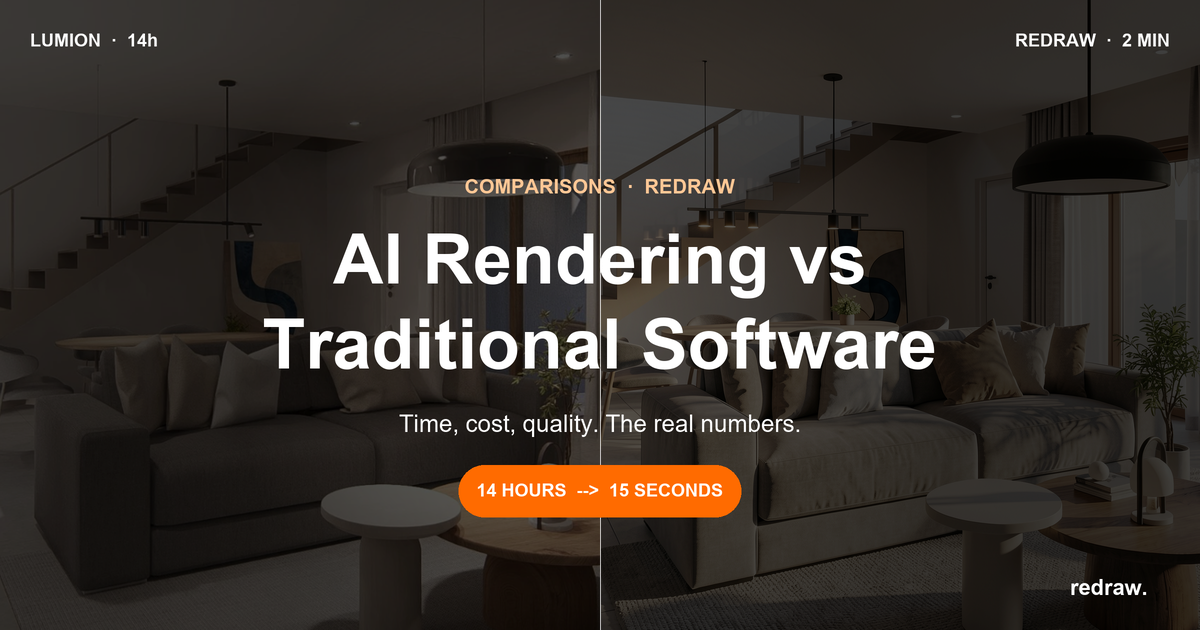
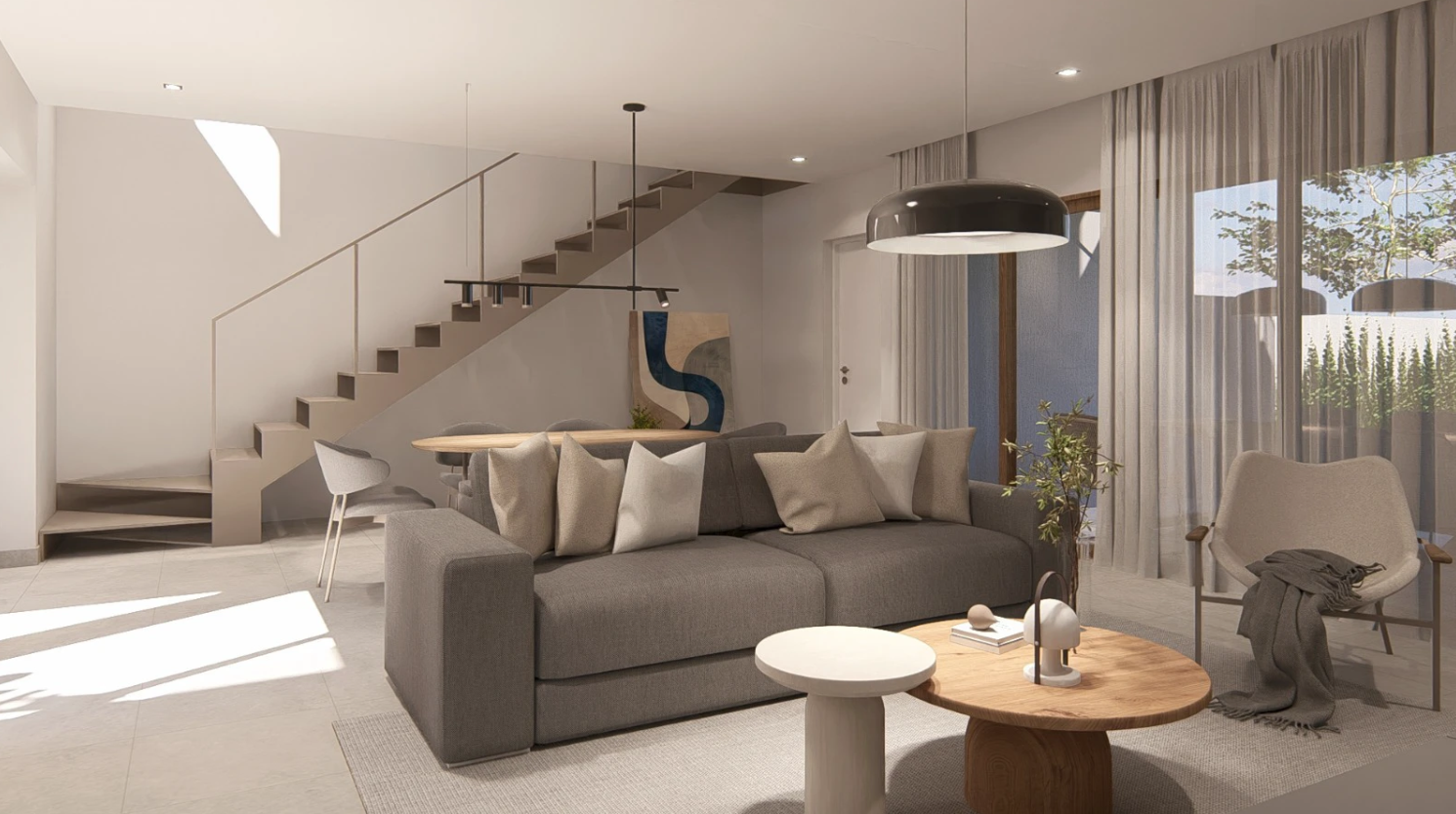
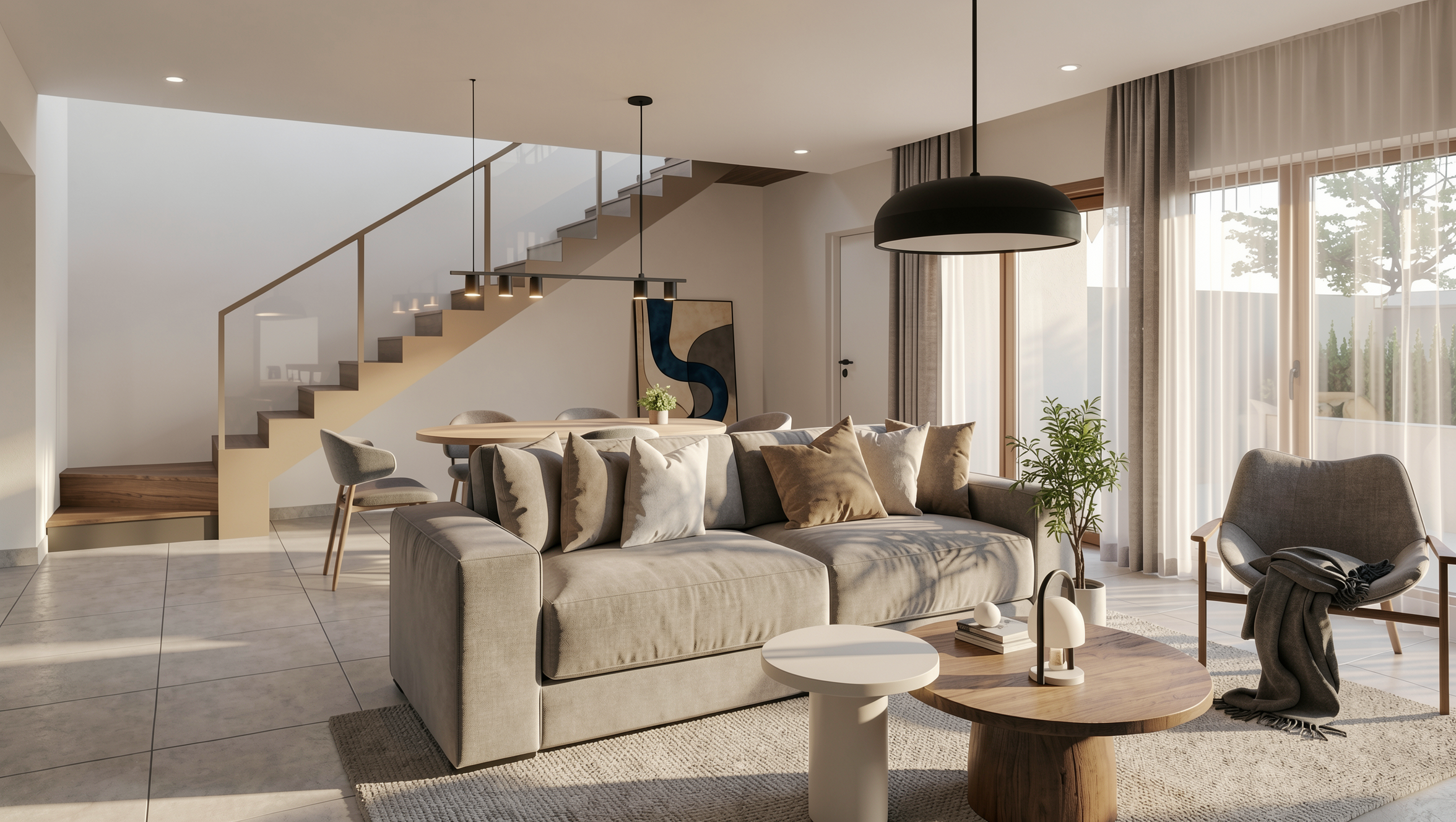
Redraw was built specifically for the architect's workflow. It receives the 3D model directly (via integration with SketchUp, Revit, Rhino, or a reference image) and generates photorealistic renders that preserve the project's geometry. In 20 to 40 seconds, you have a publishable image — without depending on a gaming PC, without render farm queues, and without losing the project's identity.
| Criterion | Redraw | Midjourney |
|---|---|---|
| 3D model integration | ✅ Native (SketchUp, Revit, Rhino) | ❌ Not supported |
| Fidelity to the original project | ✅ High — geometry preserved | ⚠️ Low — freely interpreted |
| Render time | ✅ 20–40 seconds | ⚠️ Variable, depends on workflow |
| Style control | ✅ Per-environment styles + customization | ✅ High via prompts |
| Learning curve | ✅ Low (visual interface) | ⚠️ Medium-high (prompt mastery) |
| Professional use in presentations | ✅ Direct, no adjustments | ⚠️ Requires post-production |
| Cloud processing | ✅ Yes | ✅ Yes |
| Base price | Starts with a free plan | From US$ 10/month |
| Architecture niche focus | ✅ Total | ❌ Generic |
Being honest here is part of the argument. Midjourney has legitimate uses in an architect's creative workflow:
The problem arises when the architect tries to use Midjourney to replace the technical render. That's where the hidden cost kicks in: hours tweaking prompts, inconsistent results, clients questioning details that don't match the project.
Generic AI image tools were trained on a massive universe of visual data. That makes them versatile — but also superficial when applied to a specific task.
Redraw was trained and optimized exclusively for rendering architecture, interior design, and engineering. That means:
It's the difference between a generalist and a specialist. For professional presentation rendering, specialization delivers consistency.
Estimated total time: 2–4 hours per image
Estimated total time: 5–10 minutes per image
If the goal is render for project presentation, Redraw wins without discussion. The geometry is preserved, the time is 10x shorter, and the result is publishable directly.
If the goal is creative exploration or moodboard, Midjourney is a valid and powerful tool.
The question is not which tool is "better" in absolute terms — it's which one solves the right problem. And for the architect who has to present a project to a client next week, a specialized tool beats a generic tool every time.
Ready to try it? Create your free Redraw account and render your first project in under 30 seconds.
Yes, it's possible — but with significant limitations. Midjourney does not read 3D files, so you must rely on reference images and text prompts. The output tends to diverge from the original geometry of the project, requiring time-consuming adjustments and post-production. For technical presentations, specialized tools like Redraw deliver more accurate and reliable results.
Not exactly. Midjourney is a generic, general-purpose AI image generation platform. Redraw is an AI rendering platform built exclusively for architecture and interior design. They can coexist in the workflow: Midjourney for concept and moodboard, Redraw for the final technical render.
It depends on usage volume. Midjourney starts at US$ 10/month with limited generations. Redraw has a free plan with monthly renders included and paid plans for professional use. For studios with high render volume, Redraw tends to be more cost-efficient by delivering the final result without needing rework.
Yes. That's the main technical difference. Redraw processes the geometry of the 3D model and generates the render preserving the designed structure — walls, openings, volumes, and proportions. The result is faithful to what was designed, not a free artistic interpretation.
No. Redraw runs entirely in the cloud. You only need an internet connection and a browser. Renders are generated on Redraw's servers in 20 to 40 seconds, regardless of your computer's hardware.
Yes. Redraw has native integration with SketchUp and supports models exported from Revit, Rhino, and other common architecture software. The integration eliminates intermediate steps and reduces export and configuration time.
For portfolio renders representing real projects, Redraw is the safer choice. The result preserves the project's identity and is produced in minutes. Midjourney can be useful for creating conceptual atmosphere images, but it does not replace the technical render when fidelity to the project matters.
The "Redraw vs Midjourney" question reveals a common confusion in the market: treating AI image tools as equivalents. They are not. One is generic and powerful for free creation. The other was built to solve a specific problem — professional rendering inside the architect's real workflow.
For those who design and need to present, the choice is clear. Redraw delivers what Midjourney can't: your project, exactly as you designed it, ready in under a minute.
Blog